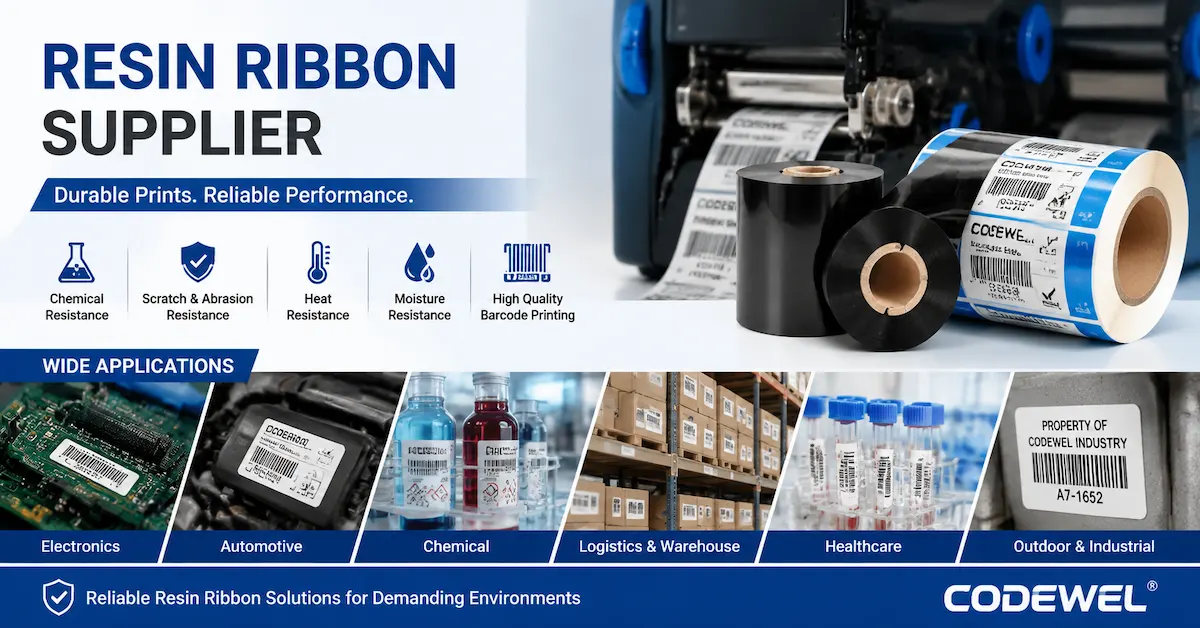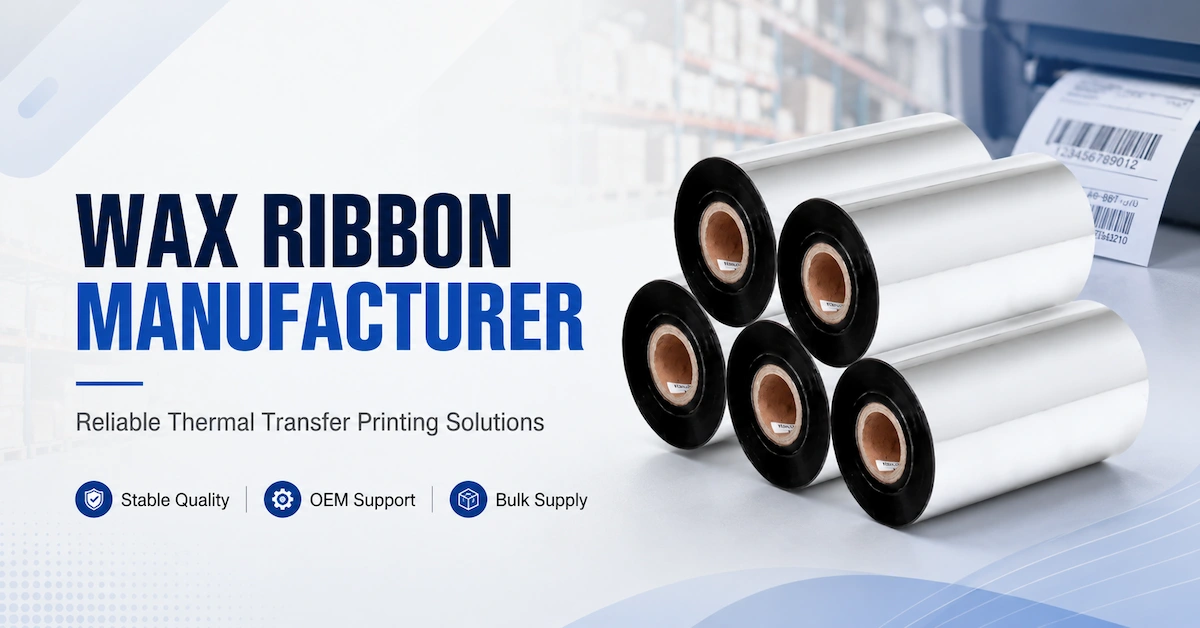

올바른 왁스 리본 제조업체 선택이 중요한 이유
전문 왁스 리본 제조업체는 완성된 리본 롤 그 이상을 제공합니다. 열전사 인쇄 시스템을 사용하는 기업의 경우 리본 제조업체는 인쇄 안정성, 바코드 가독성, 생산 효율성 및 장기적인 공급 신뢰성에 직접적인 영향을 미칩니다.
왁스 리본은 다음이 필요한 분야에 경제적인 솔루션을 제공하기 때문에 바코드 인쇄에 널리 사용됩니다.
- 바코드 인쇄 지우기
- 고속 운영
- 비용 효율적인 라벨링
- 종이 기반 자료에서 안정적인 성능
그러나 모든 왁스 리본이 동일한 성능을 제공하는 것은 아닙니다.
차이점:
- PET 베이스 필름 품질
- 왁스 잉크 배합
- 코팅 기술
- 슬리팅 정확도
- 품질 검사
- 생산 일관성
인쇄 결과에 큰 영향을 미칠 수 있습니다.
유통업체, 라벨 가공업체, 물류 회사, 제조업체, 자체 라벨 브랜드의 경우 경험이 풍부한 왁스 리본 제조업체를 선택하면 구매 위험을 줄이고 일관된 인쇄 성능을 유지하는 데 도움이 됩니다.
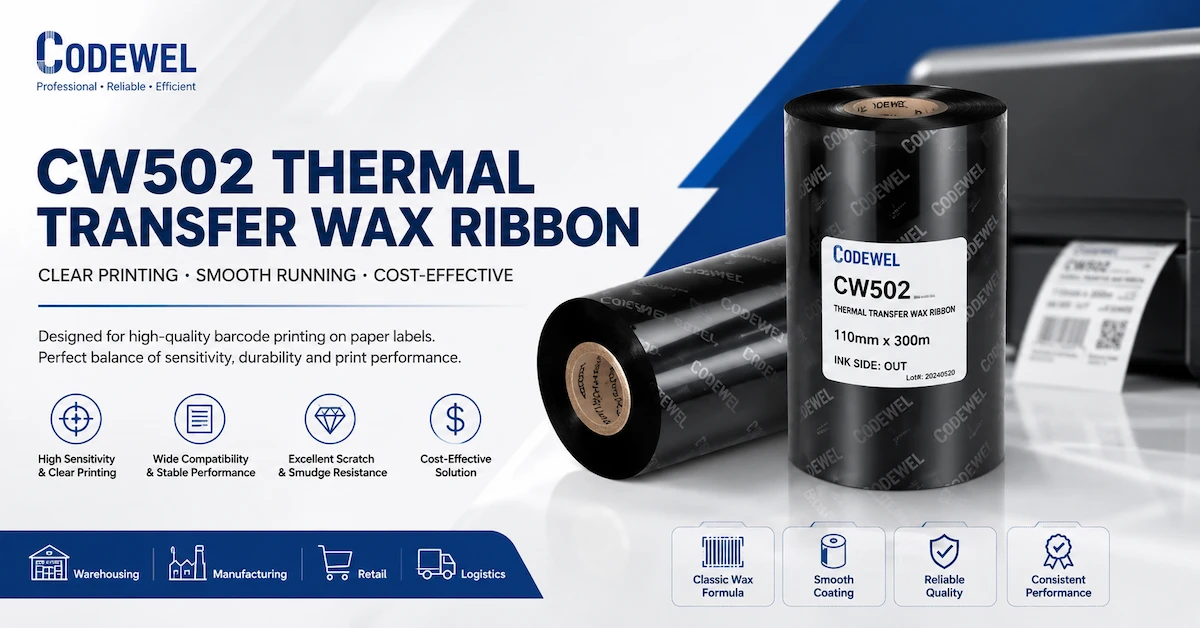
CODEWEL은 열전사 바코드 인쇄용으로 설계된 다양한 왁스 리본 제품을 제공합니다. 애플리케이션.
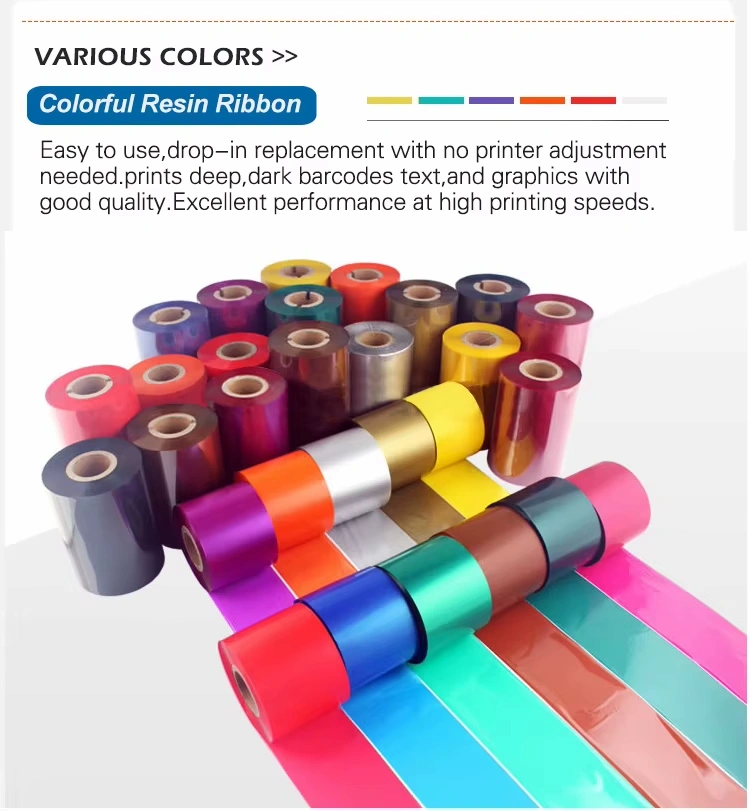
왁스 리본 제조업체란 무엇인가요?
왁스 리본 제조업체는 열전사 프린트헤드의 제어된 열을 통해 잉크를 라벨에 전사하는 열전사 리본 생산을 전문으로 합니다.
열전사 인쇄 중:
- 프린터는 프린트 헤드의 특정 영역을 가열합니다.
- 열은 왁스 기반 잉크 층을 녹입니다.
- 잉크가 리본에서 라벨 표면으로 옮겨집니다.
- 인쇄된 이미지는 영구적인 바코드와 텍스트 정보를 형성합니다.
왁스 리본은 주로 다음과 같은 용도로 설계되었습니다.
- 비용 효율성이 중요
- 인쇄 속도가 필요합니다
- 라벨은 주로 종이 기반입니다.
- 극한의 내구성은 필요하지 않습니다
고성능 레진 리본에 비해 왁스 리본은 균형에 중점을 둡니다.
- 인쇄 품질
- 생산 속도
- 비용 효율성
신뢰할 수 있는 제조업체는 다음을 포함한 전체 인쇄 시스템을 이해해야 합니다.
- 프린터 호환성
- 라벨 자료
- 인쇄 속도
- 환경 조건
- 필요한 내구성
단순히 표준 리본을 판매하는 것이 아닙니다.
왁스 열전사 리본의 주요 용도
왁스 리본은 종이 라벨과 일반 바코드 식별이 필요한 산업에서 흔히 사용됩니다.
일반적인 애플리케이션은 다음과 같습니다.
물류 및 배송 라벨
창고 및 물류 회사에서는 다음과 같은 목적으로 왁스 리본을 사용하는 경우가 많습니다.
- 배송 라벨
- 패키지 식별
- 추적 라벨
- 배송 정보
주요 요구사항은 다음과 같습니다.
- 빠른 인쇄
- 낮은 라벨당 비용
- 신뢰할 수 있는 바코드 스캐닝
소매 라벨
소매 환경에서는 일반적으로 다음과 같은 경우에 경제적인 바코드 인쇄가 필요합니다.
- 제품 라벨
- 가격표
- 인벤토리 라벨
- 서가 식별
왁스 리본은 일상적인 소매 분야에 충분한 인쇄 품질을 제공합니다.
창고 관리
창고 운영은 정확한 바코드 식별에 달려 있습니다.
왁스 리본은 일반적으로 다음 용도로 사용됩니다.
- 인벤토리 추적
- 위치 라벨
- 스토리지 식별
- 내부 관리 라벨
제조업체 식별
제조업체는 다음 용도로 왁스 리본을 사용합니다.
- 작업 중인 라벨
- 제품 추적
- 내부 식별
- 포장 라벨
화학물질, 열, 실외 조건 또는 심한 마모에 노출되는 애플리케이션의 경우 구매자는 대신 왁스 수지 또는 수지 용액이 필요할 수 있습니다.
왁스 리본은 어떻게 제조되나요?
왁스 리본의 품질은 제조 공정에 따라 크게 달라집니다.
전문 왁스 리본 제조업체는 일반적으로 몇 가지 중요한 생산 단계를 관리합니다.
- 베이스 필름 준비
- 잉크 제제
- 코팅
- 건조 중
- 뒷면 코팅
- 슬리팅
- 되감기
- 최종 점검
- 포장
각 단계는 최종 인쇄 성능에 영향을 미칩니다.
PET 베이스 필름 선택
PET 필름은 열전사 리본의 기초 레이어입니다.
중요한 특징은 다음과 같습니다:
- 안정적인 두께
- 매끄러운 표면
- 우수한 기계적 강도
- 내열성
- 일관적인 성능
고품질 베이스 필름은 다음을 지원합니다.
- 부드러운 리본 움직임
- 안정적인 인쇄
- 리본 파손 감소
- 생산 안정성 향상
대량 구매자의 경우 기본 필름 품질이 일관되지 않으면 여러 생산 배치 간에 문제가 발생할 수 있습니다.
왁스 잉크 배합 기술
왁스 잉크 레이어는 리본이 이미지를 라벨에 얼마나 효과적으로 전송하는지를 결정합니다.
중요한 성능 요소는 다음과 같습니다.
- 어두운 인쇄
- 전송 효율성
- 접착력
- 표면 호환성
- 인쇄 온도 요구사항
왁스 기반 잉크는 다음에 최적화되어 있습니다.
- 코팅지
- 무코팅 용지
- 태그 정지
- 일반 바코드 라벨
레진 기반 제제에 비해 왁스 잉크는 다음에 더 중점을 둡니다.
- 낮은 인쇄 에너지
- 더 빨라진 인쇄 속도
- 비용 효율성
백코팅 기술
뒷면 코팅은 왁스 리본 제조에서 중요하지만 종종 간과되는 부분입니다.
고품질 후면 코팅은 다음과 같은 이점을 제공합니다.
- 리본과 프린트헤드 사이의 마찰 감소
- 리본 움직임 개선
- 열전사 프린트헤드 보호
- 안정적인 인쇄 지원
낮은 후면 코팅 품질로 인해 다음이 발생할 수 있습니다.
- 마찰 증가
- 인쇄 불안정
- 더 빠른 프린트헤드 마모
이것이 전문 구매자가 리본 외관만 비교하는 것이 아니라 제조 기술을 평가해야 하는 이유입니다.
왁스 리본 제조 공정 단계
일반적인 제작 작업 흐름에는 다음이 포함됩니다.
| 제조 단계 | 주요 목적 |
|---|---|
| PET 필름 준비 | 안정적인 리본 베이스 제공 |
| 잉크 혼합 | 일관적인 왁스 배합 생성 |
| 코팅 | 균일한 잉크 레이어 적용 |
| 건조 중 | 코팅 성능 안정화 |
| 백코팅 | 프린트헤드 보호 및 움직임 개선 |
| 슬리팅 | 점보 롤을 필요한 크기로 변환 |
| 되감기 | 완성된 리본 롤 생산 |
| 검사 | 사양 및 인쇄 품질 확인 |
| 포장 | 운송 중 제품 보호 |
완벽한 생산 관리 능력을 갖춘 제조업체는 반복 주문에 대해 더 나은 일관성을 제공할 수 있습니다.
왁스 리본 구매자에게 생산 일관성이 중요한 이유
양질의 단일 샘플이 항상 장기적인 공급 품질을 나타내는 것은 아닙니다.
유통업체 및 산업 사용자의 경우 모든 생산 배치는 유사하게 유지되어야 합니다.
- 어두운 인쇄
- 리본 크기
- 롤 장력
- 코팅 성능
- 포장 품질
일관되지 않은 왁스 리본으로 인해 다음이 발생할 수 있습니다.
- 다른 인쇄 결과
- 고객 불만사항
- 프린터 조정
- 운영 비용 증가
따라서 공급업체 평가는 샘플 성능보다는 반복성에 초점을 맞춰야 합니다.
왁스리본 구조 및 기술적 특성

왁스 리본 구조를 이해하면 구매자가 제품이 인쇄 요구 사항과 일치하는지 평가하는 데 도움이 됩니다.
열전사 왁스 리본은 일반적으로 세 가지 주요 레이어로 구성됩니다.
| 레이어 | 함수 |
|---|---|
| 백코팅 | 마찰 감소, 프린트 헤드 보호, 리본 움직임 개선 |
| PET 베이스 필름 | 기계적 지지력과 열 전달 안정성 제공 |
| 왁스 잉크층 | 인쇄된 이미지, 텍스트, 바코드를 라벨로 전송 |
각 레이어는 최종 인쇄 성능에 영향을 미칩니다.
전문 왁스 리본 제조업체는 안정적인 인쇄 결과를 보장하기 위해 각 레이어의 두께, 균일성 및 성능을 제어해야 합니다.
PET 베이스 필름 성능
PET 베이스 필름은 리본의 캐리어 레이어 역할을 합니다.
중요한 특징은 다음과 같습니다:
- 균일한 두께
- 매끄러운 표면
- 내열성
- 기계적 강도
- 안정적인 장력
고품질 PET 필름은 다음을 유지하는 데 도움이 됩니다.
- 정확한 리본 이동
- 원활한 인쇄 작업
- 리본 파손 감소
- 일관적인 전송 성능
대량 바코드 인쇄 환경의 경우 필름 품질이 불안정하면 여러 생산 배치 간에 인쇄 성능이 일관되지 않을 수 있습니다.
왁스 잉크 층 성능
왁스 잉크 층은 인쇄된 이미지가 라벨에 얼마나 효과적으로 전달되는지를 결정합니다.
주요 성능 요소는 다음과 같습니다.
- 인쇄 밀도
- 이미지 선명도
- 접착력
- 녹는점
- 인쇄 속도 호환성
왁스 잉크는 일반적으로 다음에 최적화되어 있습니다.
- 종이 라벨
- 코팅지
- 배송 라벨
- 소매 태그
- 창고 식별 라벨
왁스 잉크는 수지 기반 제제에 비해 인쇄 에너지가 더 낮기 때문에 왁스 리본은 비용 효율성이 중요한 고속 인쇄 분야에 적합한 경우가 많습니다.
백코팅 보호
뒷면 코팅은 리본과 열전사 프린트헤드 사이의 상호 작용을 개선하도록 설계되었습니다.
고품질 후면 코팅이 도움이 될 수 있습니다.
- 마찰 감소
- 정적 축적 방지
- 프린트헤드 표면 보호
- 인쇄 안정성 개선
많은 수의 바코드 프린터를 운영하는 기업의 경우 적절한 리본 구성은 유지 관리 요구 사항을 줄이고 장비 가용성을 높이는 데 도움이 될 수 있습니다.
왁스 리본과 왁스 레진 리본: 어느 것을 선택해야 할까요?
구매자가 가장 자주 묻는 질문 중 하나는 왁스 리본과 왁스 레진 리본의 차이점입니다.
두 가지 모두 열전사 인쇄에 사용되지만 성능 특성은 다릅니다.
| 기능 | 왁스 리본 | 왁스 레진 리본 |
|---|---|---|
| 주요 잉크 구성 요소 | 왁스 기반 | 왁스 + 레진 혼합 |
| 비용 | 낮음 | 더 높음 |
| 인쇄 속도 | 훌륭함 | 좋음 |
| 종이 라벨 | 훌륭함 | 훌륭함 |
| 합성 라벨 | 제한적 | 더 좋음 |
| 스크래치 방지 | 기본 | 더 높음 |
| 내화학성 | 제한적 | 더 좋음 |
| 일반 애플리케이션 | 물류, 배송, 소매 | 제조, 제품 라벨, 산업용 |
왁스 리본을 선택하는 경우:
왁스 리본은 다음과 같은 경우에 적합합니다.
- 낮은 인쇄 비용
- 고속 운영
- 종이 기반 라벨
- 표준 바코드 애플리케이션
일반적인 예:
- 배송 라벨
- 창고 라벨
- 인벤토리 태그
- 소매 가격 라벨
왁스 레진 리본을 선택하는 경우:
라벨에 다음이 필요한 경우 왁스 레진이 더 좋습니다.
- 더 높은 내구성
- 더 나은 내마모성
- 환경 저항성 향상
일반적인 애플리케이션:
- 라벨 제조
- 제품 식별
- 코팅된 합성 라벨
- 산업 추적
CODEWEL은 또한 필요한 고객을 위해 왁스 레진 리본 솔루션을 제공합니다. 표준 왁스 리본에 비해 내구성이 향상되었습니다.
올바른 왁스 리본 사양 선택 방법
올바른 왁스 리본을 선택하려면 리본이 전체 인쇄 시스템과 일치해야 합니다.
중요 사양은 다음과 같습니다.
- 리본 너비
- 리본 길이
- 코어 크기
- 잉크 쪽
- 프린터 모델
- 라벨 자료
- 인쇄 속도
리본 너비 선택
리본 너비는 인쇄 요구 사항과 일치해야 합니다.
고려 사항:
- 라벨 너비
- 최대 프린터 인쇄 너비
- 인쇄 영역 크기
A ribbon that is too narrow may not fully cover the printing area.
A ribbon that is unnecessarily wide may increase material cost.
Core Size Selection
Different printers require different ribbon core specifications.
Common options include:
- 0.5 inch core
- 1 inch core
Before ordering, buyers should confirm:
- Printer compatibility
- Ribbon winding direction
- Core requirements
Ink Side Selection
Thermal transfer ribbons are commonly available with different ink orientations:
- Ink side in
- Ink side out
The correct choice depends on printer design.
A professional wax ribbon manufacturer should confirm the printer model before recommending specifications.
Printer Compatibility of Wax Ribbon
Wax ribbons are widely used with many thermal transfer printers, including:
- Zebra
- TSC
- Honeywell
- SATO
- Datamax
- Godex
- Toshiba
- Citizen
However, compatibility should always be verified.
Important factors include:
- Printer mechanism
- Printhead type
- Ribbon size
- Printing speed
- Label material
A supplier should not simply claim universal compatibility without checking the actual application.
Quality Control Standards for Wax Ribbon Manufacturing
A reliable wax ribbon manufacturer should have quality control throughout production.
Incoming Material Inspection
Before manufacturing, materials should be evaluated, including:
- PET film
- Wax ink materials
- Core components
- Packaging materials
Stable incoming materials support consistent finished products.
Coating Quality Inspection
The coating process directly affects:
- Printing darkness
- Ribbon stability
- Transfer performance
Quality checks may include:
- Coating uniformity
- Surface condition
- Ink adhesion
- Printing tests
Finished Product Testing
Before shipment, finished ribbons should be checked for:
| Inspection Item | Purpose |
|---|---|
| Ribbon Width | Confirm printer compatibility |
| Ribbon Length | Ensure quantity accuracy |
| Roll Appearance | Prevent handling issues |
| Edge Quality | Reduce wrinkles and feeding problems |
| Printing Performance | Verify actual output |
| Packaging | Protect during transportation |
For distributors and industrial buyers, production traceability is especially important for repeat orders.
OEM Wax Ribbon Manufacturing Services
For distributors and private-label brands, OEM capability is an important supplier selection factor.
A professional wax ribbon manufacturer should support customization options such as:
Product Customization
- Ribbon width
- Ribbon length
- Core size
- Ink side
- Ribbon formulation
- Packaging quantity
Brand Customization
- Private label stickers
- Carton design
- Product labels
- Brand identification
Application Customization
Different industries may require different wax ribbon specifications.
Examples:
- Logistics distributors may need economical bulk packaging.
- Label companies may require multiple sizes.
- Brand owners may require customized packaging.
OEM cooperation helps companies create differentiated product lines while maintaining stable supply.
Why Work With a Professional Wax Ribbon Manufacturer?
Working directly with an experienced manufacturer provides several advantages.
Stable Product Quality
Manufacturing control helps maintain:
- Consistent coating
- Stable printing performance
- Repeatable specifications
Better Technical Support
A professional manufacturer can help evaluate:
- Printer compatibility
- Label material
- Ribbon type
- Application requirements
Flexible Customization
Manufacturers are generally better positioned to support:
- Custom sizes
- OEM packaging
- Bulk orders
- Special requirements
Long-Term Supply Reliability
For distributors and industrial users, stable supply is essential.
A qualified manufacturer should provide:
- Clear production schedules
- Reliable lead times
- Consistent quality
- Communication support
Wax Ribbon Purchasing Checklist
Before selecting a wax ribbon manufacturer, buyers should confirm:
Product Capability
✓ Wax ribbon product range
✓ Different sizes available
✓ Compatible with required printers
✓ Suitable for target labels
Manufacturing Capability
✓ Coating capability
✓ Slitting capability
✓ Production consistency
✓ Quality inspection process
Customization Capability
✓ OEM packaging
✓ Private label support
✓ Customized specifications
Technical Support
✓ Ribbon recommendation
✓ Application testing
✓ Printing troubleshooting
Supply Capability
✓ Production capacity
✓ Lead time
✓ Repeat order stability
A supplier meeting these requirements is more likely to support long-term business development.
Wax Ribbon Applications Across Different Industries
A professional wax ribbon manufacturer should understand that ribbon selection depends on the actual application environment, not only the printer model.
Wax ribbon is widely used because it provides a practical balance between:
- Printing quality
- Cost efficiency
- Production speed
- Barcode readability
However, buyers should confirm whether the application requires higher durability before choosing wax ribbon.
Logistics and Warehouse Applications
Logistics companies are among the largest users of wax thermal transfer ribbons.
Common applications include:
- Shipping labels
- Package identification
- Tracking labels
- Inventory management labels
- Warehouse location labels
Main requirements:
- Fast printing speed
- Clear barcode scanning
- Low cost per label
- Reliable daily operation
For standard paper shipping labels, wax ribbon is often an economical solution.
Retail and Product Label Applications
Retail businesses commonly use wax ribbon for:
- Price tags
- Product labels
- Shelf labels
- Inventory identification
Important requirements include:
- Sharp text printing
- Clear barcode readability
- Efficient label production
Wax ribbon provides good performance for everyday retail labeling where extreme resistance is not required.
Manufacturing Identification Applications
Manufacturers use barcode labels for:
- Work-in-process tracking
- Production management
- Component identification
- Internal logistics
Wax ribbon can be suitable for:
- Paper-based production labels
- Short-term identification
- Indoor manufacturing environments
For automotive, electronics, or chemical environments requiring stronger resistance, buyers may consider resin-based alternatives.
E-Commerce Fulfillment Applications
E-commerce warehouses require large quantities of shipping labels every day.
Wax ribbon is often selected because it provides:
- Lower consumable costs
- High-speed printing
- Stable barcode output
- Easy replacement
For fulfillment centers processing thousands of packages daily, ribbon consistency is more important than choosing the cheapest product available.
How to Reduce Procurement Risks When Buying Wax Ribbon
Choosing a wax ribbon manufacturer requires evaluating more than product pricing.
Many purchasing problems come from:
- Incorrect ribbon selection
- Unstable quality
- Poor compatibility
- Lack of technical support
- Unclear specifications
Risk 1: Choosing Based Only on Price
A cheaper ribbon may create additional costs through:
- More rejected labels
- Poor barcode scanning
- Increased printer adjustment
- Higher maintenance requirements
Professional buyers should compare:
- Printing performance
- Roll consistency
- Supplier reliability
- Total operating cost
Risk 2: Incorrect Label Compatibility
Wax ribbon works best with suitable label materials.
Before purchasing, confirm:
- Paper type
- Label coating
- Required durability
- Printing environment
Using the wrong ribbon may cause:
- Weak adhesion
- Poor image quality
- Easy scratching
- Barcode scanning problems
Risk 3: Lack of Sample Testing
Before placing a large order, buyers should test:
- Actual printer
- Actual labels
- Actual printing settings
- Expected operating conditions
A sample approval process reduces future production issues.
Risk 4: Unstable Production Batches
For distributors and large users, consistent repeat orders are critical.
A reliable manufacturer should maintain:
- Stable raw materials
- Controlled coating process
- Production records
- Batch identification
How CODEWEL Supports Wax Ribbon Buyers
CODEWEL provides thermal transfer printing solutions for businesses requiring reliable barcode printing products.
Its product range covers:
- Thermal transfer ribbons
- Barcode printing consumables
- Printers
- Printheads
- Related printing accessories
Customers can explore the complete thermal transfer ribbon solutions for different printing applications.
For standard barcode printing requirements, CODEWEL provides wax ribbon products designed for logistics, retail, warehouse, and general labeling applications.
For customers requiring improved durability, wax resin ribbon provides a stronger balance between cost and resistance performance.
For applications requiring durable synthetic labels, buyers can evaluate resin ribbon solutions.
Why Choose CODEWEL as a Wax Ribbon Manufacturer?
Selecting a manufacturer requires evaluating not only the product but also the supplier's ability to support long-term cooperation.
CODEWEL focuses on helping B2B customers with:
Product Selection Support
Customers can provide:
- Printer model
- Label material
- Ribbon size
- Application requirements
The technical team can help identify suitable ribbon options.
OEM and Custom Manufacturing
CODEWEL supports customized requirements including:
- Ribbon specifications
- Packaging requirements
- Private labeling
- Bulk purchasing solutions
This helps distributors and brands develop their own product offerings.
Stable Supply Capability
For businesses purchasing regularly, supply stability is essential.
A reliable manufacturer should support:
- Repeat orders
- Consistent specifications
- Production planning
- Quality tracking
Technical Application Support
Wax ribbon performance depends on the complete printing system.
CODEWEL can help customers evaluate:
- Printer compatibility
- Label materials
- Ribbon selection
- Printing requirements
For quotation requests or application evaluation, buyers can contact CODEWEL through the contact page.
Wax Ribbon Manufacturer Selection Checklist
Before selecting a supplier, review the following points:
Manufacturing Capability
- Does the supplier control ribbon production?
- Can they maintain stable quality?
- Do they support repeat production?
Product Knowledge
- Can they explain wax, wax resin, and resin differences?
- Can they recommend suitable products?
- Do they understand printer compatibility?
Quality Control
- Are raw materials controlled?
- Is coating quality inspected?
- Are finished rolls tested?
OEM Capability
- Can they customize packaging?
- Can they support private labels?
- Can they manage bulk requirements?
Business Support
- Is technical support available?
- Are lead times clear?
- Is communication efficient?
A manufacturer that meets these requirements is more likely to become a reliable long-term partner.
Frequently Asked Questions About Wax Ribbon Manufacturers
1. What does a wax ribbon manufacturer produce?
A wax ribbon manufacturer produces thermal transfer ribbons using processes such as PET film preparation, wax ink coating, back coating, slitting, rewinding, and quality inspection.
2. What labels are suitable for wax ribbon?
Wax ribbons are commonly used for coated paper, uncoated paper, shipping labels, warehouse labels, retail tags, and general barcode applications.
3. Is wax ribbon compatible with Zebra printers?
Many wax ribbons can be used with Zebra thermal transfer printers, but compatibility should be confirmed based on printer model, ribbon size, and label material.
4. What is the difference between wax ribbon and wax resin ribbon?
Wax ribbon focuses on cost efficiency and paper label printing, while wax resin ribbon provides improved durability and better resistance to scratching and environmental exposure.
5. Can a wax ribbon manufacturer provide OEM services?
Yes. OEM services may include custom sizes, packaging, labels, branding, and specifications depending on supplier capability.
6. How can I evaluate wax ribbon quality?
Test the ribbon on your actual printer and labels. Evaluate print clarity, barcode readability, adhesion, durability, and consistency between samples.
7. What affects wax ribbon pricing?
Pricing depends on:
- Ribbon width
- Ribbon length
- Raw materials
- Order quantity
- Packaging requirements
- Customization needs
8. How do I choose between wax ribbon and resin ribbon?
Choose based on application requirements. Wax is suitable for economical paper labels, while resin is designed for demanding synthetic materials requiring higher resistance.
9. Why is manufacturing consistency important for wax ribbon?
Consistent production ensures that repeat orders provide the same printing performance, reducing adjustments, waste, and customer complaints.
10. How can I request wax ribbon samples from CODEWEL?
Provide your printer model, label material, ribbon specification, and application requirements through the CODEWEL contact page to discuss suitable wax ribbon options.
Conclusion
Choosing the right wax ribbon manufacturer helps businesses achieve reliable barcode printing performance, stable supply, and better long-term purchasing value.
A professional manufacturer should provide more than competitive pricing. Buyers should evaluate manufacturing capability, coating technology, quality control, customization options, technical support, and production consistency.
For logistics, retail, warehousing, and general barcode applications, wax ribbon remains a cost-effective thermal transfer solution.
By working with an experienced supplier, companies can reduce printing problems, improve operational efficiency, and build a more reliable labeling system.
For bulk orders, OEM projects, or application-specific recommendations, contact CODEWEL with your printer model, label material, ribbon specifications, and purchasing requirements.