
中国杭州市余杭区中泰街道同晋路2号
logo

如何选择热转印色带供应商以实现可靠的工业打印

  • 热转印色带导向装置
  • 条码打印解决方案
Posted by CODEWEL On Aug 14 2026

为什么选择正确的热转印色带供应商很重要

可靠的热转印色带供应商提供的不仅仅是标准打印耗材。对于B2B买家来说,供应商的选择直接影响打印稳定性、条码可读性、生产效率以及长期运营成本。

热转印色带是条码识别系统中的关键组件。色带与打印机、打印头、标签材料和软件设置配合使用,可创建清晰、持久的打印信息。

对于批量采购的公司来说,最低的碳带价格并不总是意味着最低的总成本。质量差或不合适的色带可能会导致:

  • 不可读的条形码
  • 标签浪费增加
  • 频繁调整打印机
  • 打印头磨损更快
  • 生产中断
  • 维护成本更高

专业的供应商应该帮助买家选择合适的碳带配方,确认兼容性,提供稳定的生产质量,并支持长期供应需求。

对于分销商、制造商、标签加工商和条码解决方案提供商来说,选择合适的合作伙伴是构建可靠的热敏打印供应链的重要组成部分。
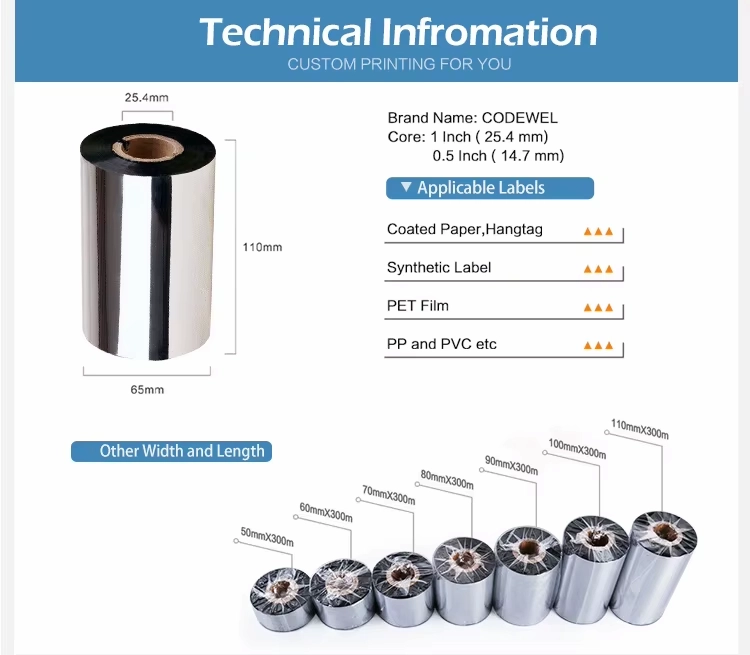
热转印色带供应商

热转印碳带供应商提供什么?

一家热转印色带供应商提供用于热转印打印系统的色带产品。打印过程中,打印头产生的热量将墨水从色带转移到标签、包装薄膜、合成材料或纺织基材上。

与直接热敏打印不同,热转印技术需要色带作为墨水载体。

完整的热敏打印系统包括:

  • 热转印色带
  • 条码打印机
  • 打印头
  • 标签材料
  • 打印软件
  • 条形码验证流程
  • 合格的供应商应该了解这些要素如何协同工作,而不是简单地销售色带卷。

    您可以查看 CODEWEL 完整的热转印色带产品系列,了解不同的色带类别和应用程序。

    谁应该与热转印碳带供应商合作?

    不同的买家群体有不同的购买需求。了解这些差异有助于公司选择正确的供应商模式。

    条码色带经销商

    分销商通常需要能够提供以下功能的供应商:

    • 稳定的产品可用性
    • 具有竞争力的批发价格
    • 多个功能区类别
    • OEM 和自有品牌支持
    • 一致的重复订单
    • 技术援助

    对于分销商来说,供应商的可靠性直接影响客户满意度,因为他们的客户依赖于一致的打印性能。

    拥有广泛产品组合的供应商使分销商能够支持不同的行业,而无需管理多个来源。

    标签加工商和印刷公司

    标签转换器通常需要更多技术支持,因为色带性能在很大程度上取决于标签材料。

    他们的要求通常包括:

    • 不同的色带宽度
    • 自定义规格
    • 涂层质量稳定
    • 可靠的批次一致性
    • 与各种基材的兼容性

    例如,与生产标准纸质运输标签的公司相比,生产 PET 标签的标签加工商可能需要不同的碳带解决方案。

    工业制造商

    制造公司通常将热转印打印用于:

    • 产品标识
    • 库存跟踪
    • 合规标签
    • 组件标记
    • 追溯系统

    他们的主要优先事项包括:

  • 持久的打印质量
  • 条码扫描可靠性
  • 耐工业环境
  • 减少停机时间
  • 汽车、电子、化学制造和医疗设备等行业通常需要更高性能的碳带解决方案。

    条码解决方案提供商

    系统集成商和自动化公司需要了解完整条形码生态系统的供应商。

    他们可能需要:

    • 热敏丝带
    • 打印机
    • 打印头
    • 标签
    • 条码扫描仪
    • 技术支持

    了解完整打印流程的供应商可以提供更好的建议并降低项目风险。

    了解不同的热转印色带类型

    专业的热转印碳带供应商应该了解不同的应用需要不同的碳带配方。

    三个最常见的功能区类别是:

    • 蜡色带
    • 蜡树脂色带
    • 树脂色带

    特殊应用可能需要:

  • TTO 近边缘色带
  • 清洗护理树脂色带
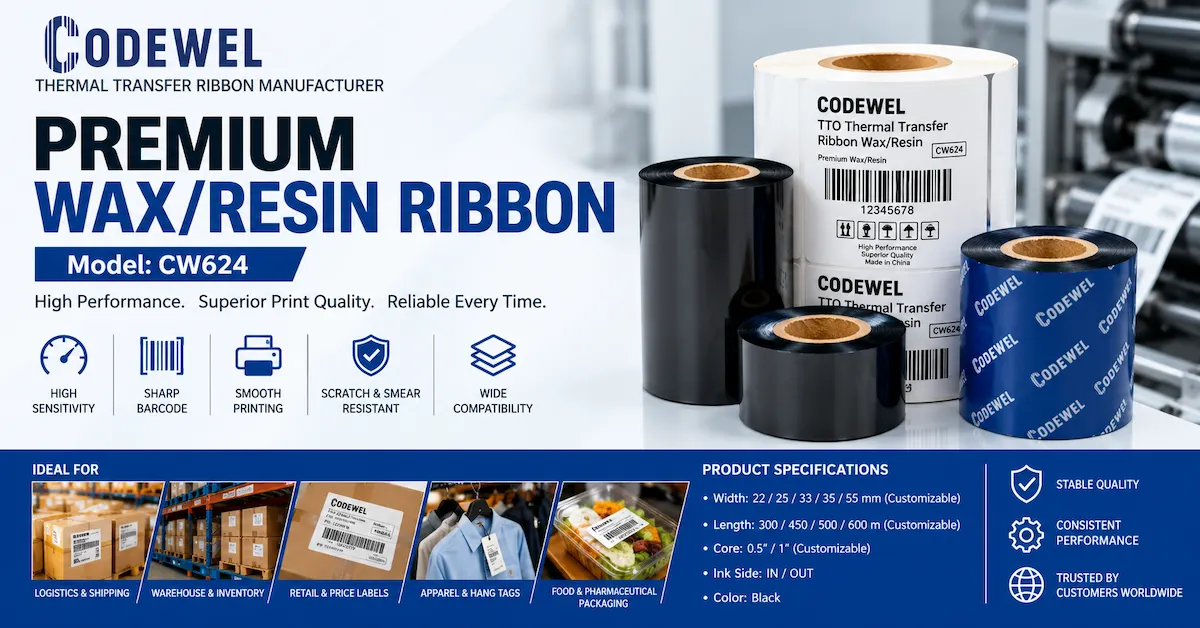
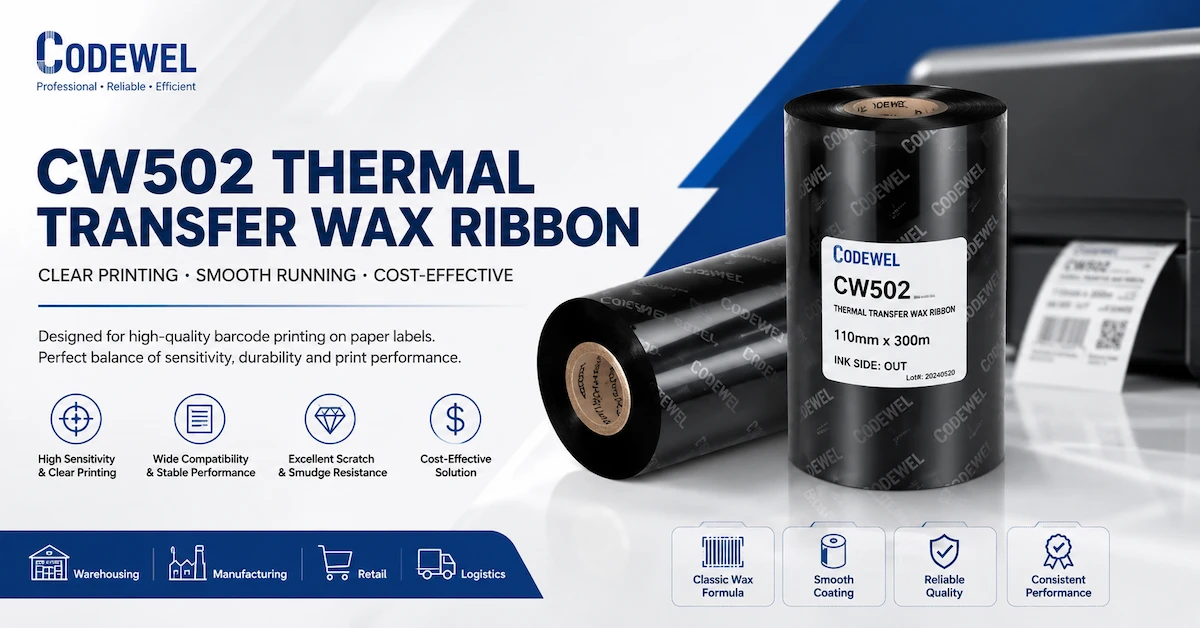
  • 蜡色带:经济高效的纸质标签打印

    对于打印成本和速度是主要优先考虑的应用,通常选择蜡色带。

    典型应用包括:

  • 发货标签
  • 仓库标签
  • 库存标签
  • 零售标签
  • 纸箱标识
  • 优点包括:

    • 成本更低
    • 高打印速度
    • 在纸质材料上表现良好
    • 适合一般条码应用

    对于寻求经济型条码打印解决方案的客户,CODEWEL 提供蜡色带专为常见热转印应用而设计的解决方案。

    蜡树脂碳带:成本与耐用性之间的平衡

    蜡树脂碳带结合了蜡和树脂的特性,与标准蜡碳带相比,提供了更高的耐用性。

    它通常用于:

    • 产品标签
    • 物流标签
    • 制造标识
    • 铜版纸应用
    • 一些合成材料

    好处包括:

    • 更好的耐刮擦性
    • 提高附着力
    • 更高的耐用性
    • 更广泛的基材兼容性

    对于需要平衡价格和性能的买家,蜡树脂色带解决方案通常是一个实用的选择。

    树脂碳带:高耐用性打印应用

    树脂碳带专为需要更强阻力的苛刻应用而设计。

    典型应用包括:

  • 电子标签
  • 汽车识别
  • 化学标签
  • 户外识别
  • 持久资产跟踪
  • 优点包括:

    • 出色的耐磨性
    • 耐化学性
    • 耐热性
    • 长期可读性

    对于需要更强性能的工业应用,买家可以根据标签材料和环境评估树脂碳带产品要求。

    用于高速包装的 TTO 色带
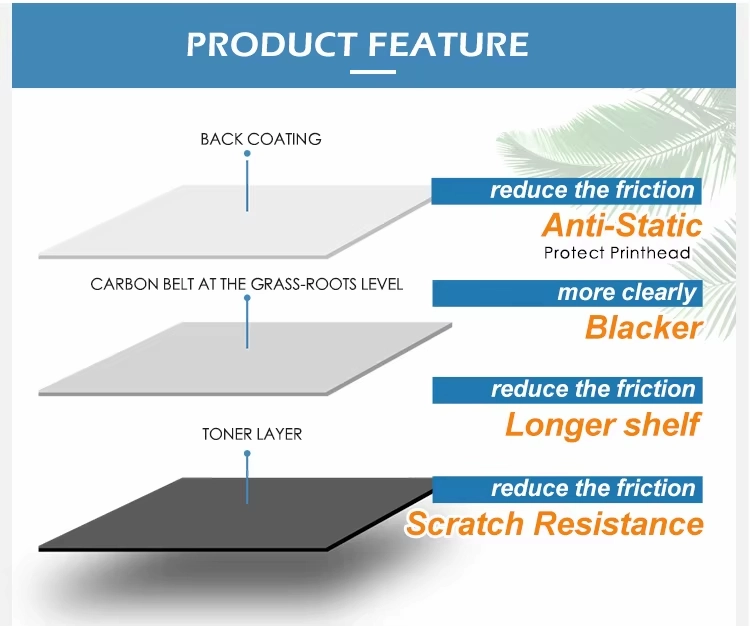
    Thermal-transfer-ribbon-layer-struct.webp

    热转印套印 (TTO) 色带专为自动化包装环境而设计。

    常见应用包括:

  • 食品包装
  • 药品包装
  • 柔性薄膜
  • 生产线编码
  • 重要的选择因素包括:

  • 打印速度
  • 包装薄膜类型
  • 粘附性能
  • 机器兼容性
  • 对于包装应用,CODEWEL 提供TTO 近边缘满足特殊打印要求的色带解决方案。

    纺织应用洗涤护理树脂色带

    与普通条形码标签相比,纺织品标签需要不同的耐用性标准。

    洗涤护理树脂色带设计用于:

  • 服装标签
  • 护理标签
  • 洗衣标识
  • 纺织品跟踪
  • 所需性能包括抵抗:

  • 洗涤
  • 干洗
  • 熨烫
  • 重复处理
  • CODEWEL 提供洗涤护理树脂色带解决方案,适用于纺织品和纺织品工业洗衣应用。

    热转印碳带制造如何影响质量

    买家在选择热转印碳带供应商时,应该评估制造能力,而不仅仅是成品外观。

    生产过程影响:

  • 打印一致性
  • 色带稳定性
  • 打印机性能
  • 长期可靠性
  • PET 基膜质量

    聚酯薄膜是织带结构的基础。

    重要因素包括:

    • 厚度一致性
    • 机械强度
    • 光滑的表面质量
    • 传热稳定性

    稳定的基膜有助于在打印过程中保持色带移动的一致性。

    油墨涂层技术

    油墨层决定了许多性能特征:

    • 打印浓度
    • 附着力
    • 耐刮擦性
    • 耐化学性
    • 打印能源要求

    不同的配方针对不同的应用而设计。

    蜡配方优先考虑经济打印,而树脂配方则注重耐用性和恶劣环境。

    背面涂层保护

    背面涂层是碳带性能的重要组成部分。

    合适的背面涂层有助于:

  • 减少摩擦
  • 保护热敏打印头
  • 改进功能区移动
  • 支持稳定的大批量打印
  • 对于工业用户来说,正确的背面涂层有助于延长打印头的使用寿命。

    分切复卷精度

    涂层后,大卷被转换成成品色带卷。

    制造精度影响:

    • 功能区宽度
    • 边缘质量
    • 卷筒张力
    • 绕线稳定性

    分切质量差可能会导致:

    • 色带褶皱
    • 打印不均匀
    • 喂养问题
    • 打印机中断

    对于批量买家来说,生产一致性通常比单个成功的样品更重要。

    如何在热转印碳带供应商和制造商之间进行选择

    采购热转印色带时,买家通常需要决定是直接与制造商合作还是通过分销商购买。

    最佳选择取决于:

  • 订单量
  • 自定义要求
  • 技术支持需求
  • 预计送达
  • 市场策略
  • 热转印碳带制造商

    制造商直接控制生产流程,例如:

  • 原材料选择
  • 涂层
  • 分切
  • 快退
  • 质量检查
  • 包装
  • 优点包括:

  • 更好的生产控制
  • 更多自定义选项
  • 更稳定的重复订单
  • 更好地支持 OEM 项目
  • 直接技术沟通
  • 制造商通常适合:

  • 进口商
  • 批发分销商
  • 自有品牌
  • 大型工业用户
  • 长期供应协议
  • 热转印色带分配器

    经销商可以提供:

    • 更快的本地可用性
    • 订单数量较小
    • 多个品牌
    • 本地客户支持

    它们适合:

  • 小批量买家
  • 紧急更换需求
  • 需要混合产品的公司
  • 但是,分销商对以下方面的控制权可能较少:

    • 色带配方
    • 生产变更
    • 包装定制
    • 批次一致性

    对于建立长期供应链的公司来说,与有实力的热转印色带制造商合作可以更好地控制产品质量和规格。

    购买前验证热转印色带兼容性
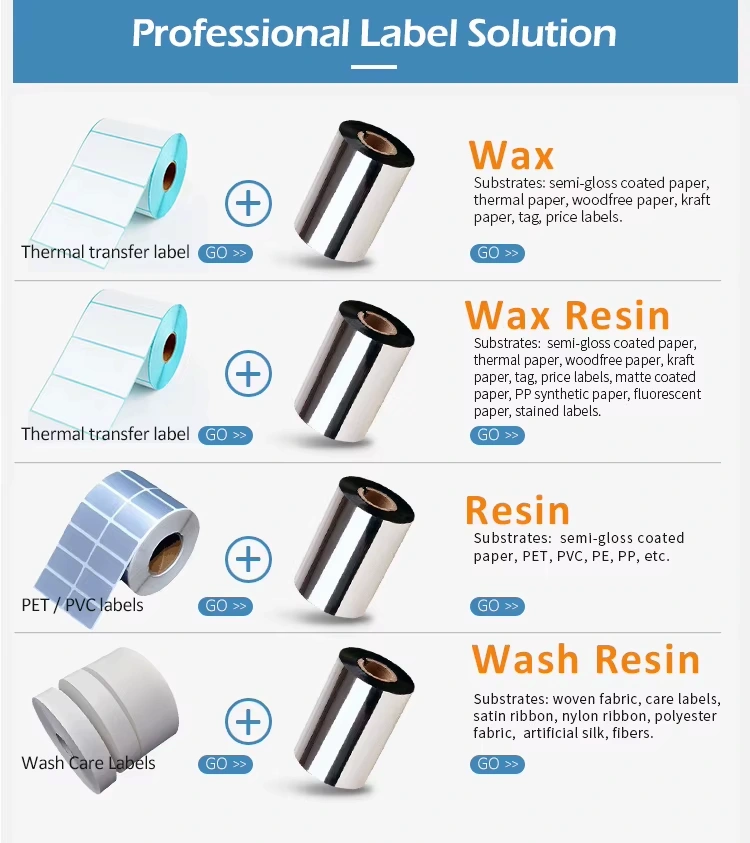
    热转印色带标签解决方案

    最常见的购买错误之一是仅根据尺寸或价格选择丝带。

    热转印色带必须与完整的打印系统相匹配。

    重要的兼容性因素包括:

    • 打印机品牌和型号
    • 打印头类型
    • DPI 分辨率
    • 功能区宽度
    • 色带长度
    • 核心大小
    • 墨水面
    • 标签材料
    • 打印速度
    • 应用环境

    专业供应商在推荐产品之前应索取申请信息。

    打印机和打印头兼容性

    热转印打印性能在很大程度上取决于色带和打印头之间的关系。

    合适的功能区应能与以下设备正常配合使用:

  • 桌面条码打印机
  • 工业条码打印机
  • TTO 打印机
  • 纺织品打印机
  • 包装编码系统
  • 不同的打印机可能有不同的要求:

  • 热能
  • 打印速度
  • 功能区结构
  • 功能区尺寸
  • 例如,为标准平头条码打印机设计的色带可能不适合高速近边缘包装系统。

    平头与近边热转印色带

    了解打印技术有助于买家选择正确的色带。

    平头热转印打印

    平头打印机通常用于:

  • 发货标签
  • 仓库标签
  • 产品标识
  • 制造标签
  • 它们广泛用于:

  • 蜡色带
  • 蜡树脂色带
  • Resin ribbon
  • Near-Edge Thermal Transfer Printing

    Near-edge technology is mainly used for:

    • Flexible packaging
    • Food packaging
    • Pharmaceutical packaging
    • High-speed production lines

    It requires specialized ribbons designed for:

    • Fast printing speed
    • Continuous operation
    • Packaging film surfaces

    A reliable supplier should confirm the printer technology before recommending ribbon specifications.

    How to Evaluate Thermal Transfer Ribbon Print Quality

    Print quality is not only about how dark the barcode looks.

    A professional evaluation should consider:

    • Barcode readability
    • Edge sharpness
    • Print consistency
    • Scratch resistance
    • Smudge resistance
    • Adhesion
    • Long-term durability

    For industrial applications, poor barcode quality can create:

    • Scanning failures
    • Production delays
    • Inventory errors
    • Product traceability problems

    Thermal Transfer Ribbon Quality Control Process
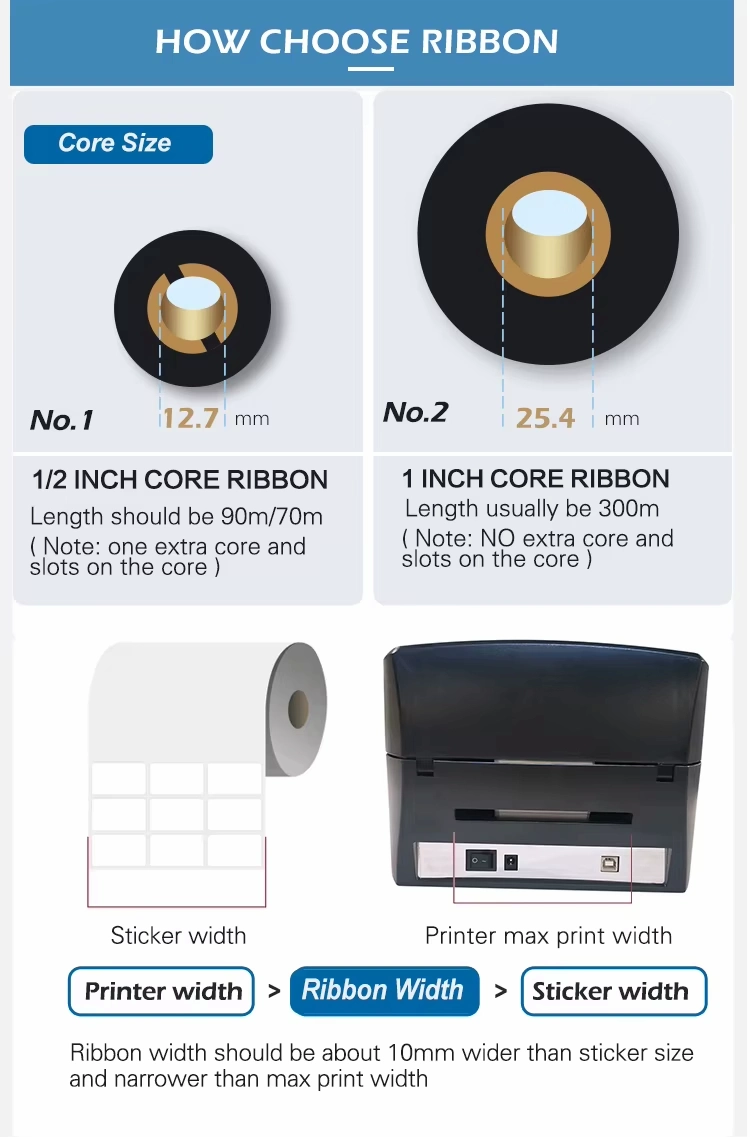
    image - 2026-08-14T111331.194.webp

    A professional thermal transfer ribbon supplier should have quality control throughout the production process.

    Raw Material Inspection

    Before production, suppliers should control:

    • PET film quality
    • Ink materials
    • Back coating materials
    • Core quality

    Stable raw materials help maintain consistent ribbon performance.

    Coating Process Control

    The coating process influences:

    • Ink transfer performance
    • Print density
    • Ribbon durability
    • Printer compatibility

    Important factors include:

    • Coating thickness
    • Uniformity
    • Drying conditions
    • Surface quality

    Slitting and Rewinding Inspection

    Finished ribbon rolls should be checked for:

    • Correct width
    • Accurate length
    • Smooth edges
    • Stable winding
    • Proper packaging

    Poor converting quality may cause:

    • Ribbon wrinkles
    • Tracking issues
    • Uneven printing

    OEM and Private Label Thermal Transfer Ribbon Services

    For distributors and brand owners, OEM capability is an important supplier selection factor.

    A professional OEM thermal transfer ribbon supplier should support customization requirements such as:

    OEM services are especially valuable for:

    • Barcode consumable distributors
    • Regional brands
    • Printing solution companies
    • Importers

    A reliable OEM partner should maintain approved specifications to ensure future orders remain consistent.

    Cost Factors When Choosing a Thermal Transfer Ribbon Supplier

    Many buyers compare only the price per roll.

    However, the real purchasing cost includes:

    Total Cost = Ribbon Price + Printing Waste + Downtime + Maintenance + Replacement Cost

    A lower-priced ribbon may create higher costs if it causes:

    • Poor print quality
    • Increased rejected labels
    • Frequent printer adjustments
    • Shorter printhead lifespan

    Factors Affecting Thermal Transfer Ribbon Cost

    Customization Item Purpose
    Ribbon Width Match different printer models
    Ribbon Length Adjust printing efficiency
    Core Size Ensure printer installation compatibility
    Ink Side Match printer configuration
    Ribbon Formula Meet different application needs
    Packaging Design Build private-label products
    Brand Labels Improve market recognition

    Professional buyers should compare suppliers using the same specification rather than comparing different ribbon types.

    How CODEWEL Supports Thermal Transfer Ribbon Buyers

    CODEWEL focuses on thermal transfer printing solutions and provides products covering:

    • Thermal transfer ribbons
    • Barcode printing consumables
    • Thermal printers
    • Printheads
    • Barcode scanners
    • Printer spare parts
    • Related printing equipment

    The company provide s multiple ribbon categories, including:

    • Wax Ribbon
    • Wax Resin Ribbon
    • Resin Ribbon
    • TTO Near Edge Ribbon
    • Wash Care Resin Ribbon

    Buyers can explore the complete thermal transfer ribbon product range for different printing applications.

    For customers requiring economical paper label printing, CODEWEL provides wax ribbon solutions.

    For applications requiring stronger durability, buyers can evaluate wax resin ribbon solutions or resin ribbon products.

    For textile and laundry applications, wash care resin ribbon supports durable garment label printing.

    For packaging applications, TTO near edge ribbon provides solutions for high-speed coding requirements.

    Thermal transfer ribbon size selection guide

    Thermal Transfer Ribbon Supplier Evaluation Checklist

    Before selecting a supplier, buyers should confirm:

    Product Capability

    • Can the supplier provide multiple ribbon types?
    • Can they recommend suitable products for different materials?
    • Do they understand thermal printing applications?

    Manufacturing Capability

    • Do they control coating and converting processes?
    • Can they maintain stable production batches?
    • Can they support long-term supply?

    Quality Management

    • Are raw materials controlled?
    • Are finished products tested?
    • Can production batches be traced?

    OEM Capability

    • Can they customize specifications?
    • Can they provide private-label packaging?
    • Can they maintain consistent repeat orders?

    Technical Support

    • Can they analyze printing issues?
    • Can they recommend suitable ribbon types?
    • Can they support printer compatibility questions?

    Frequently Asked Questions About Thermal Transfer Ribbon Suppliers

    1. What is the difference between a thermal transfer ribbon supplier and manufacturer?

    A supplier provides ribbon products, while a manufacturer directly controls production processes such as coating, slitting, and quality inspection. Manufacturers are usually more suitable for OEM and large-volume purchasing.

    2. How do I choose a reliable thermal transfer ribbon supplier?

    Evaluate product quality, manufacturing capability, compatibility knowledge, OEM support, quality control process, and technical service instead of only comparing prices.

    3. Which thermal transfer ribbon type should I choose?

    It depends on the label material and application. Wax is commonly used for paper labels, wax resin provides balanced performance, and resin is used for demanding synthetic materials.

    4. Can thermal transfer ribbons be customized?

    Yes. Suppliers may customize ribbon width, length, core size, ink side, formula, packaging, and private-label branding depending on requirements.

    5. What information should I provide before ordering?

    Provide printer model, label material, ribbon size, application environment, printing speed, required durability, and order quantity.

    6. Why do thermal transfer ribbons create poor print quality?

    Common causes include incorrect ribbon selection, incompatible label material, wrong printer settings, worn printheads, or unstable ribbon quality.

    7. Are resin ribbons always better than wax ribbons?

    Not necessarily. Resin provides higher durability but may be unnecessary for simple paper labels. Choosing the correct ribbon type avoids unnecessary cost.

    8. How can I test a new ribbon supplier?

    Request samples, test them using your actual printer and labels, evaluate printing performance, and complete a pilot order before large-volume purchasing.

    9. Can one ribbon work with Zebra and TSC printers?

    Some ribbons may be compatible with multiple printer brands, but confirmation is required based on printer model, printhead type, dimensions, and application.

    10. How can I contact CODEWEL for thermal transfer ribbon solutions?

    Prepare your printer model, label material, ribbon specifications, and application requirements, then contact CODEWEL through the contact page for product evaluation and quotation support.

    Conclusion

    Selecting the right thermal transfer ribbon supplier is an important decision for companies relying on barcode printing, product identification, and traceability systems.

    The best supplier is not simply the one offering the lowest price. A reliable partner should provide stable manufacturing quality, technical expertise, customization capability, and long-term supply reliability.

    Before placing a bulk order, evaluate ribbon formulation, printer compatibility, production capability, quality control, OEM support, and total operating cost.

    By choosing the right supplier, businesses can achieve clearer printing, fewer production interruptions, improved barcode readability, and a more reliable thermal printing system.

    For thermal transfer ribbon sourcing, OEM requirements, or application-specific recommendations, contact CODEWEL through the contact page and provide your printer model, label material, and purchasing requirements.

    精选博客

    Tag:

    • 条码打印解决方案
    • 蜡树脂丝带
    • 树脂丝带
    • 热转印色带供应商
    • 热转印色带制造商
    • TTR丝带
    • OEM热转印色带
    • 热敏打印指南
    分享
    精选博客

    首页

    产品

    中心

    接触

    大车

    Factor Impact
    Ribbon Formula Resin usually costs more than wax
    Ribbon Size Width and length affect unit price
    Order Quantity Larger volume may reduce cost
    Custom Packaging Influences OEM pricing
    Shipping Method Affects total landed cost
    Product Consistency Reduces operational waste