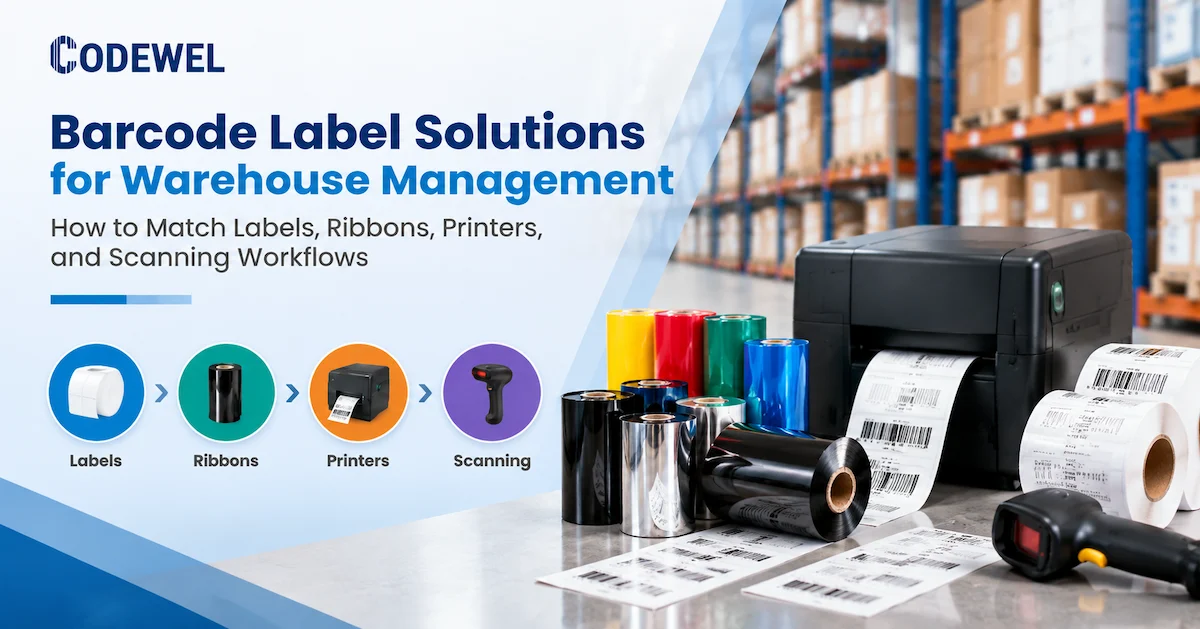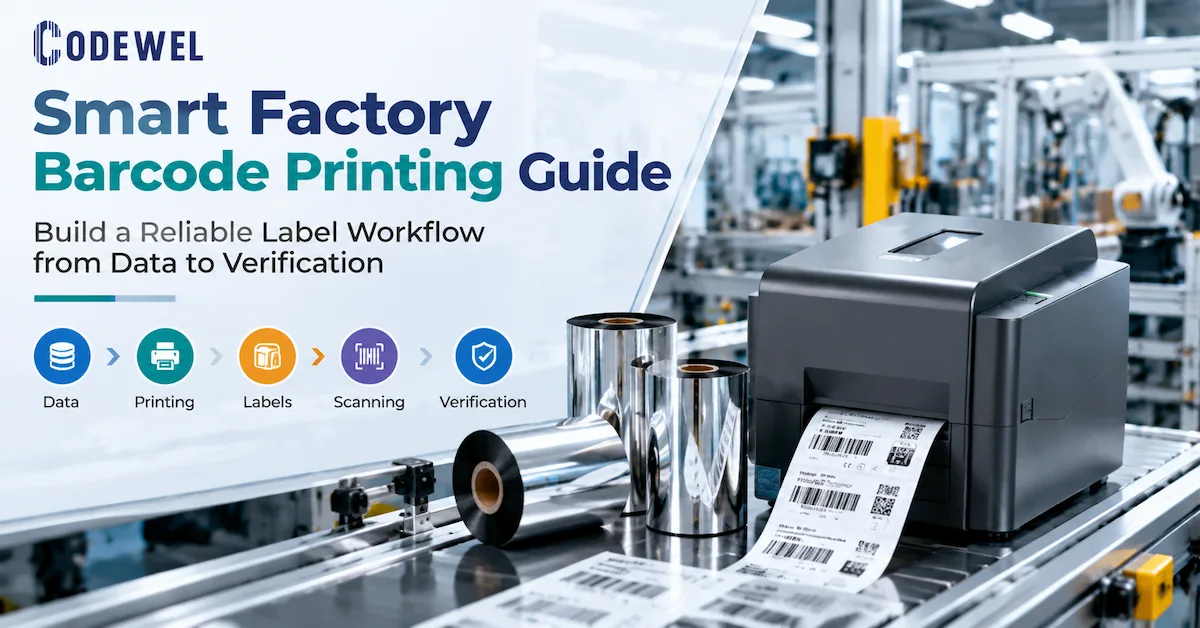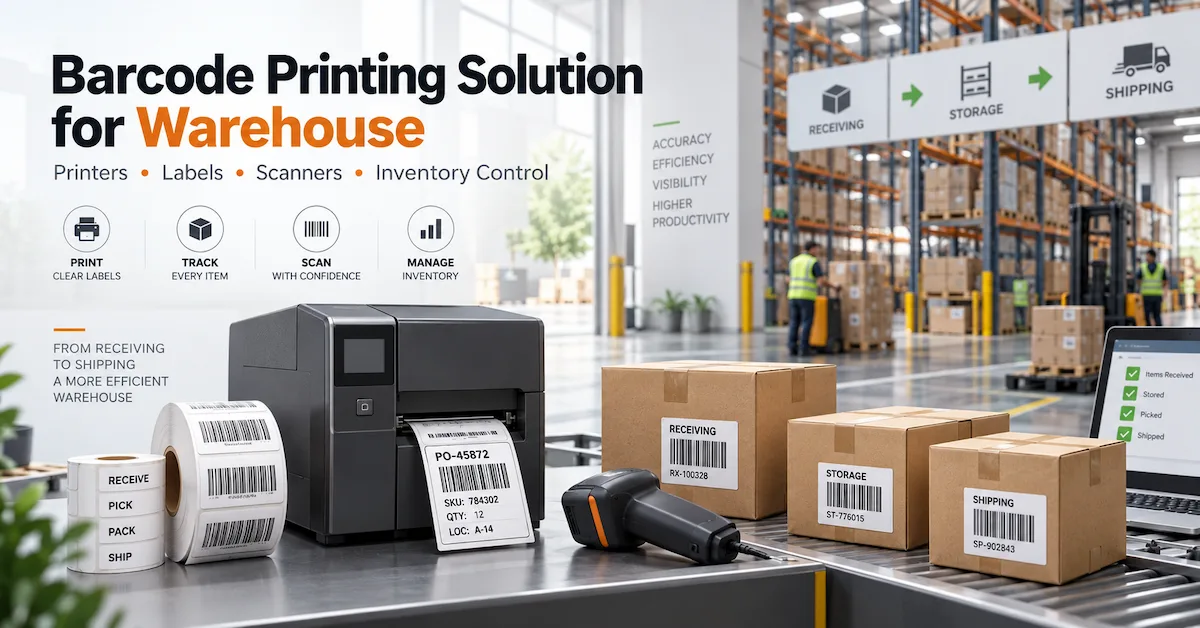

Self adhesive labels look simple because the user sees one finished piece. In production, the label is a layered construction with several variables that interact. The face material carries the printed information. The adhesive creates the bond to the product or package. The release liner supports the label during coating, die-cutting, slitting, winding, storage, and dispensing. A change in any layer can affect print quality, dispensing, curl, residue, application speed, and service life.
That is why the search for a self adhesive label manufacturer is normally a commercial investigation or supplier-comparison task. A buyer may be sourcing warehouse labels, product identification labels, shipping labels, asset labels, electronics labels, food packaging labels, or private-label stock. The real question is not simply "Can this supplier make a label?" It is "Can this supplier document the construction, test the application, control the conversion process, and reproduce the approved result when the next order arrives?" This guide gives procurement teams, distributors, converters, manufacturers, logistics companies, and system integrators a practical framework for answering that question.
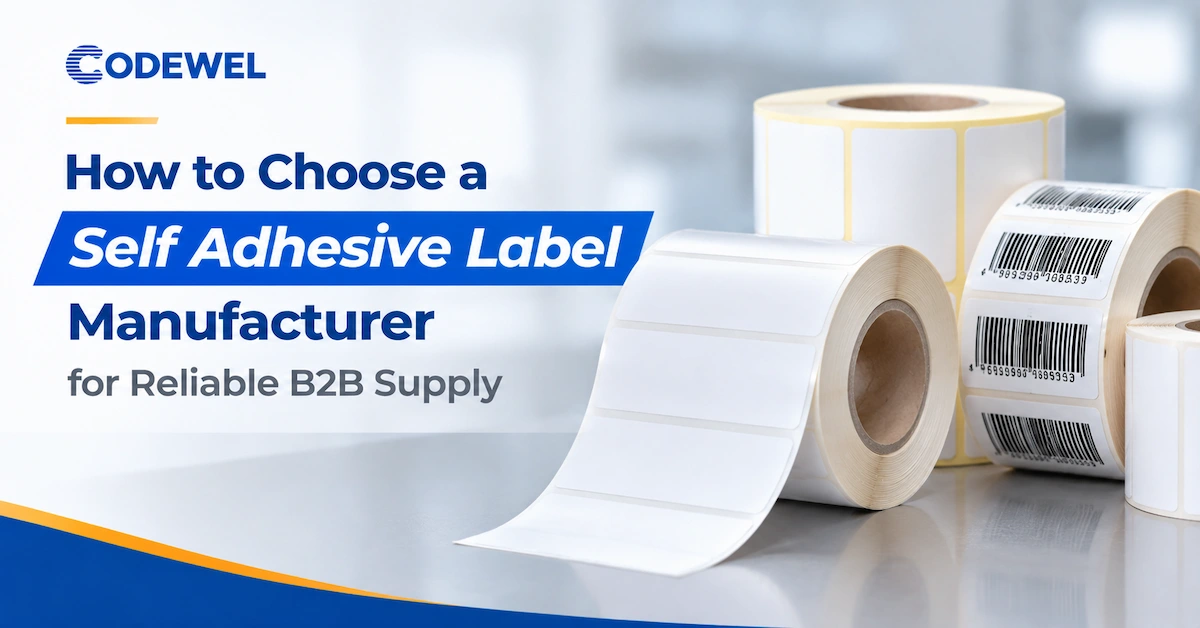
What Should a Self Adhesive Label Manufacturer Verify First?
The first verification should be the application, not the label size. A good RFQ tells the manufacturer what the label must do after it leaves the factory. The label may need to remain attached through transport, cold storage, handling, cleaning, outdoor exposure, or repeated scanning. It may need to run through a direct thermal or thermal transfer printer, or it may be preprinted before application. Each requirement changes the recommended construction.
| Requirement | Buyer should specify | Why it matters |
|---|---|---|
| Application surface | Corrugated board, coated carton, glass, metal, PET, PP, PE, painted surface, or another substrate | Surface energy, texture, curvature, dust, and surface treatment influence wet-out and final adhesion. |
| Service environment | Indoor, outdoor, freezer, moisture, oil, chemicals, abrasion, sunlight, heat, or short-term use | The facestock and adhesive must retain function in the actual exposure conditions. |
| Print process | Direct thermal, thermal transfer, inkjet, laser, flexographic, digital, or preprinted supply | The coating, surface smoothness, heat response, and ribbon compatibility affect image quality. |
| Label geometry | Finished width, length, gap, corner radius, shape, orientation, and winding direction | Geometry controls printer calibration, die-cutting, dispensing, and application speed. |
| Roll format | Core diameter, outside diameter, labels per roll, face-out or face-in winding, and packing method | The right label can still be unusable if the roll does not fit the printer or applicator. |
| Data and durability | Barcode type, smallest element, human-readable text, variable data, scan distance, and expected life | Defines the required print contrast, resolution, surface, and verification method. |
| Commercial controls | Target quantity, sample requirement, packaging, MOQ, lead time, and repeat-order tolerances | These fields must be confirmed by the supplier; they should not be inferred from a product title. |
If the application is not defined, the supplier can only quote a generic construction. That may produce a low initial price but a high risk of rework, label lifting, unreadable barcodes, liner breaks, or printer stoppages. A technically useful quotation repeats the assumptions and marks unknown fields as "to be confirmed." This makes multiple suppliers comparable and gives the buyer a clear record for sample approval.
Understand the Three Layers of a Self-Adhesive Label
Facestock: the printable or visible layer
Facestock is the top layer that receives ink, thermal transfer, direct thermal imaging, or another print process. Common choices can include paper and synthetic films such as PET, PP, or PE, but the correct choice depends on the application. Paper can be practical for many indoor cartons, shipping labels, inventory labels, and general identification tasks. A synthetic facestock may be considered when moisture resistance, tear resistance, dimensional stability, or a longer service life is important. The important procurement point is that "synthetic" is not one universal performance level. Thickness, surface treatment, opacity, stiffness, and print coating still need to be confirmed.
For a thermal application, ask whether the label is direct thermal or intended for thermal transfer. Direct thermal facestock contains a heat-sensitive image-forming coating and does not use a ribbon. Thermal transfer facestock is printed through a ribbon, and the surface must accept the transferred ink at the required speed and energy. A label manufacturer should recommend the media and ribbon as a pair when the end use requires durable barcode or variable-data printing.
Adhesive: the bond to the application surface
Adhesive selection is where many label specifications become too vague. "Permanent adhesive" describes an intended behavior, not a complete test result. The adhesive may need to bond to a rough corrugated carton, a smooth glass bottle, a low-energy plastic, a powder-coated metal surface, or a cold package. Initial tack, wet-out, final adhesion, shear resistance, temperature range, removability, and residue can all matter.
Permanent, removable, freezer, hot-melt, and acrylic adhesive families can serve different application goals. A removable label may be required for reusable bins or retail changes, while a permanent label may be needed for traceability. A freezer application may need an adhesive that can form a bond at low temperature rather than an adhesive that works only after the package warms up. The manufacturer should confirm which adhesive is available for the requested facestock and should test it on the actual substrate.
Release liner: the support layer
The release liner carries the adhesive label until dispensing or application. Its paper or film construction, caliper, release force, stiffness, and coating consistency influence die-cutting, matrix stripping, roll winding, label dispensing, and liner waste. A liner that is too weak may break during conversion or dispensing. A liner that releases unevenly may cause labels to lift, curl, or remain on the backing. A buyer who uses an automatic applicator should provide the equipment model and operating speed so the liner can be evaluated in the real process.
The label construction should be treated as a system. Changing the face material while keeping the same adhesive and liner can change stiffness and release behavior. Changing the liner can change roll diameter and winding tension. A responsible manufacturer records the approved construction so future orders do not substitute a visually similar material without review.
How to Match Materials to Common Applications
A useful material discussion begins with the surface, exposure, print method, and expected label life. Industry names such as "shipping label" or "product label" are not specific enough because two buyers may use those terms under completely different conditions.
| Application example | Questions to answer | Construction direction to evaluate |
|---|---|---|
| Corrugated cartons and warehouse handling | Is the board dusty, recycled, coated, cold, or exposed to condensation? How long must the code remain scannable? | Paper or synthetic facestock with an adhesive tested on the actual carton; choose direct thermal or thermal transfer by label life and exposure. |
| Glass bottles and containers | Is the surface clean, curved, wet, cold, or exposed to condensation? Is removal required? | Adhesive and stiffness must be tested for curvature and surface condition; the face material must tolerate the planned printing and handling. |
| Plastic totes, films, and molded parts | What polymer is used? Is the surface low energy, textured, dusty, or treated? Will the label be removed? | Compare adhesive behavior on the exact plastic and test edge lift, shear, residue, and curvature. |
| Metal, painted parts, and electronics | Will the label see heat, oil, cleaning chemicals, abrasion, or long storage? Is a small barcode required? | Synthetic facestock and a suitable adhesive may be evaluated, with print and scan testing at the smallest design size. |
| Cold chain and freezer packages | Is application performed before or after chilling? What condensation and temperature transitions occur? | Freezer-oriented adhesive and a facestock that remains usable at the service temperature should be tested together. |
| Retail, product, and promotional labels | Is appearance the main objective? Does the label need to be removable, glossy, matte, or brand-colored? | Define the printing process, color proof, finish, die shape, adhesive behavior, and expected shelf conditions. |
These directions are starting points for a technical discussion, not a substitute for validation. The final construction should be approved on the target surface using representative samples. A label that adheres well to clean stainless steel may behave differently on a textured powder-coated panel or a dusty recycled carton. Ask the manufacturer to identify the test substrate and environmental conditions in the sample record.
Direct Thermal or Thermal Transfer Labels?
The printing method should be selected before the label construction is finalized. Direct thermal and thermal transfer are both common in barcode workflows, but they place different requirements on the label.
| Decision point | Direct thermal | Thermal transfer |
|---|---|---|
| Consumable | Heat-sensitive label media; no ribbon | Label media plus a compatible thermal transfer ribbon |
| Operational advantage | Simple loading and fewer consumables for short-life identification | Can support durable images when ribbon, facestock, and printer settings are matched |
| Exposure question | Will heat, light, abrasion, moisture, or chemicals darken or damage the image? | Will the transferred image resist the planned handling and environment? |
| Supplier evidence | Sample print and exposure review on the intended direct thermal stock | Sample print using the intended label, ribbon grade, printer, speed, and darkness |
| Common mistake | Choosing by price without defining required image life | Choosing ribbon first without testing ribbon-to-label compatibility |
For thermal transfer, the label manufacturer and ribbon supplier should coordinate the specification. Codewel's public portfolio includes barcode ribbon, wax ribbon, wax-resin ribbon, resin ribbon, printers, printheads, and printing consumables. That product range makes it possible to discuss the print system as a set, but it does not remove the need to confirm the exact ribbon grade, width, winding, printer model, resolution, speed, and label surface for a particular order.
For direct thermal, the buyer should request information about image stability and intended life rather than assuming that every heat-sensitive stock behaves the same way. For thermal transfer, the buyer should request a printed sample and inspect edge definition, barcode readability, ribbon tracking, smearing, and the energy setting needed to reach the result. The best choice is the lowest-complexity process that still meets the label's service life and scanning requirements.
Roll Format, Die-Cutting, and Converting Details
A self adhesive label manufacturer is also a converter. The conversion stage turns a master material into the finished roll, sheet, fanfold, or custom shape that the customer can apply. This is where a correct material can become an operational problem if the format is incomplete.
Dimensions and tolerances
Specify finished label width and length, corner radius, gap, perforation, black mark if required, and any waste matrix or edge trim. For small labels, a small dimensional change can affect sensor registration or barcode placement. If the label is applied automatically, provide the applicator tolerance and the required web direction. If the label is printed in a thermal printer, provide the printer model and maximum media width so the supplier can check the loading path.
Core, winding, and outside diameter
Core size and outside diameter determine whether the roll fits the printer, dispenser, rewinder, or applicator. Winding direction determines whether the printed or adhesive side presents correctly at the point of application. The supplier should record labels per roll and the acceptable roll diameter range. These fields are easy to omit from a general quotation and expensive to discover after delivery.
Die-cutting and waste removal
Die-cut accuracy affects label release, corner integrity, and the ability to dispense at speed. A cut that reaches too deeply into the liner can create breaks or release problems. A cut that is too shallow can leave labels attached to the matrix. Ask how the supplier controls the die, verifies the gap, and handles repeat orders when the same shape is reordered. For custom shapes, retain an approved drawing with dimensions and orientation.
Packaging and identification
Packaging should protect the roll from humidity, dust, compression, telescoping, and edge damage. Each carton or roll should be traceable to the purchase order, specification revision, material construction, and production batch where the supplier's system supports that record. Do not accept a package marked only with a general product name when multiple facestocks, adhesives, sizes, or winding directions exist.
How to Evaluate Print Quality and Barcode Readability
Label quality is not just appearance. A label can look dark and still fail a scanner because of poor edge definition, quiet-zone loss, low contrast, distortion, missing gaps, or an incorrect data string. The approval process should test the label in the same way it will be used.
- Use the real printer technology, media, ribbon if applicable, and label format.
- Print representative data, including the smallest barcode, longest text, and any 2D symbol used in production.
- Scan the label with the intended handheld scanner, fixed scanner, or mobile device.
- Inspect quiet zones, bar width, registration, darkness, smearing, voids, wrinkles, and edge lift.
- Repeat after the label has been handled, transported, exposed, or applied as expected.
- Record the printer model, printhead resolution, speed, darkness, ribbon grade, media lot, and test result.
For a high-risk identification process, use the customer's barcode verification method or an agreed third-party verification method. A manufacturer may provide a visual inspection or sample scan, but the buyer remains responsible for approving the label against its own application and system. The acceptance criteria should state whether a single successful scan is enough or whether a defined verification grade, contrast, or failure rate is required.
What Quality Controls Should a Manufacturer Show?
Quality control should connect incoming material, conversion settings, finished-roll inspection, and release records. Buyers do not need a vague promise of "strict QC"; they need to know what is checked and how a nonconforming roll is contained.
| Control stage | Useful evidence to request | Buyer acceptance question |
|---|---|---|
| Material identification | Facestock, adhesive, liner, coating, and batch or lot record | Can the supplier identify the approved construction and prevent unapproved substitution? |
| Printing or coating compatibility | Sample print, ribbon pairing, surface finish, and application notes | Does the label produce the required image under the stated printer settings? |
| Slitting and winding | Width, roll diameter, core, winding direction, telescoping, and edge inspection | Will the roll load, unwind, and dispense in the intended equipment? |
| Die-cutting | Label dimensions, gap, shape, liner integrity, and matrix behavior | Can the labels separate cleanly without breaks or misregistration? |
| Adhesion validation | Test substrate, application method, dwell time, temperature, and observation | Was the bond tested on the actual surface rather than a convenient laboratory surface? |
| Final release | Inspection record, sample retention, packing label, and specification revision | Can the next order be compared with the approved sample? |
The correct evidence depends on the product and application. A supplier may not publish every internal work instruction, but a B2B buyer should be able to obtain enough information to understand the controls. If the supplier cannot explain the material identity, conversion format, sample approval, or repeat-order process, price alone is a weak basis for selection.
How to Run a Practical Adhesion and Environment Test
Adhesion tests should reproduce the actual application. Clean a test surface only in the way the production process cleans it. Apply the label with the same pressure and orientation used in production. Record the starting condition, dwell time, temperature, humidity, and any exposure to water, oil, chemicals, friction, or freezer cycles. Then inspect edge lift, bubbling, flagging, peeling, residue, and loss of print readability.
Test the first bond and the aged bond
Initial tack and final adhesion answer different questions. A label may stick immediately but lose bond after a temperature change. Another label may need time to wet out before reaching the intended bond. The supplier should state the observation interval used in the sample assessment. For a reusable asset or a long-life product, include an aged or exposure observation rather than approving the label from the first five minutes.
Test application at the difficult condition
If labels will be applied to cold cartons, dusty corrugated boxes, curved parts, or low-energy plastic, test those conditions directly. A clean room-temperature coupon may demonstrate that the adhesive can bond in ideal conditions, but it does not answer the buyer's operational question. If the real process varies, test the most difficult reasonable condition and document what is acceptable.
Keep a retained approved sample
Retain the approved label, roll identification, printed sample, and specification revision. When the next order arrives, compare the construction and performance against that reference. This is particularly important when a label is private-labeled, when several suppliers are used, or when the original order was approved by a different team. A retained sample gives procurement, production, and quality staff a shared reference.
How to Compare Self Adhesive Label Manufacturers
Supplier comparison should score evidence, technical response, production fit, and supply controls rather than only unit price. A manufacturer with a slightly higher quoted price may reduce waste and downtime if it supplies the correct roll format and repeatable construction. Conversely, a polished sales presentation is not evidence of suitability unless the supplier can answer the application questions.
| Comparison area | Questions to ask | Evidence that improves confidence |
|---|---|---|
| Application knowledge | Does the supplier ask about surface, temperature, life, print process, and equipment? | Written recommendation tied to the stated application and clear assumptions. |
| Material control | Can the supplier name the proposed facestock, adhesive family, and liner, and control substitutions? | Construction record, sample label, and change-control communication. |
| Conversion capability | Can the supplier produce the required die, width, gap, core, winding, and packing format? | Drawing, roll sample, dimensional check, and packing specification. |
| Print-system support | Can the supplier test the label with the intended printer, ribbon, and scanner? | Representative print sample and documented test conditions. |
| Quality response | What happens if rolls arrive telescoped, labels lift, or a barcode fails? | Defined inspection, sample retention, complaint process, and corrective-action response. |
| Commercial fit | What are MOQ, sample cost, lead time, payment, packaging, and shipping terms? | Written quotation; unknown values marked as to be confirmed before purchase. |
| Repeat orders | How does the supplier preserve the approved construction and revision? | Order history, approved specification, batch identification, and change notice. |
Codewel's public company information identifies Hangzhou Codewel New Materials Co., Ltd. as a Hangzhou-based enterprise established in January 2018, integrating R&D, production, and marketing. The company describes a portfolio covering barcode labels, thermal transfer ribbons, hot stamping foils, thermal transfer printers, printheads, barcode scanners, and related supplies. The website also publishes company-level claims about more than 10 coating and cutting production lines, a production base of more than 6,000 square meters, annual output above 100 million square meters, and exports to more than 100 countries. These are useful company-level facts for supplier screening; they should not be interpreted as confirmed specifications, capacity, MOQ, or lead time for a particular self-adhesive label order.
The public Self Adhesive Label collection is an official product entry point, while the captured page currently indicates that no goods are listed. For that reason, a buyer should send a complete specification and ask Codewel to confirm available facestock, adhesive, liner, format, sample process, MOQ, lead time, packaging, and current commercial status before treating the category as an order-ready listing.
Build the RFQ Around the Finished Label
A clear RFQ reduces back-and-forth and makes supplier quotations comparable. The goal is not to prescribe a material before testing; it is to provide enough information for the manufacturer to recommend and quote a construction responsibly.
- Application: describe what the label identifies, where it is applied, who applies it, and how long it must remain readable.
- Substrate: name the surface and provide a physical sample or photograph showing texture, curvature, coating, and contamination risk.
- Environment: state temperature, moisture, condensation, sunlight, abrasion, oils, chemicals, cleaning, and expected storage conditions.
- Face material: state whether paper, thermal stock, PET, PP, PE, or another material is preferred, while allowing the supplier to recommend a tested alternative.
- Adhesive behavior: specify permanent, removable, freezer, repositionable, or residue requirements and when application occurs.
- Printing: provide printer model, print technology, DPI, speed, ribbon type if used, data layout, barcode symbology, and smallest code.
- Geometry: give width, length, gap, corner radius, shape, orientation, perforation, and tolerance.
- Roll format: include core, maximum outside diameter, labels per roll, winding direction, and packing requirement.
- Quantity: separate sample quantity, first order, monthly or annual forecast, and expected repeat pattern.
- Approval: define the sample test, scan method, adhesion observation, packaging check, and who signs the approved specification.
- Commercial fields: request MOQ, price basis, sample cost, lead time, shipping terms, payment terms, and validity; require confirmation instead of assumptions.
When the label is part of a larger barcode system, include the related printer, ribbon, printhead, and scanning requirements. Codewel's public Label Jumbo Roll and Printing Consumables pages can be used as catalogue starting points for a media discussion, but the exact finished format and availability still need technical confirmation. A system-level RFQ is more useful than a request that says only "quote 100,000 labels, size 100 x 50 mm."
Common Sourcing Mistakes to Avoid
Buying by size only
Size is necessary, but it does not identify the facestock, adhesive, liner, roll direction, or print method. Two labels with the same dimensions can behave very differently on the same package. Add the application and service environment to the RFQ.
Approving a sample on the wrong surface
A sample on clean glass does not approve a label for dusty corrugated board, textured plastic, or cold metal. Test the real substrate and record the application method. If the customer has several substrates, test each one that creates a meaningful failure risk.
Separating label and ribbon decisions
Thermal transfer image quality depends on the ribbon, label surface, printhead, speed, and energy setting. Choosing the lowest-cost label and ribbon independently can create smearing, poor edge definition, or premature image loss. Approve the printed output, not just the two consumables separately.
Ignoring repeat-order change control
A first order may perform well, while a later order changes the liner, adhesive, coating, or winding because the specification was never recorded. Ask for an approved construction and a process for notifying the buyer before a material or conversion change.
Assuming a catalogue page is a live stock list
Product categories and collection pages are useful for finding a supplier's scope, but they do not necessarily confirm current stock, MOQ, lead time, or orderability. Codewel's captured Self Adhesive Label collection currently shows no goods listed, so those fields must be confirmed in the quotation process.
Frequently Asked Questions
What does a self adhesive label manufacturer actually supply?
A manufacturer or converter can supply a finished label construction that combines facestock, adhesive, release liner, die-cutting, slitting, winding, and packaging. The exact materials, formats, and commercial terms vary by supplier and application, so the buyer should request a written construction and sample approval.
How do I choose a self adhesive label manufacturer for barcode labels?
Start with the application surface, label life, printer technology, barcode size, roll format, and scan method. Choose the supplier that can test the finished label on the real substrate and produce a repeatable roll format, rather than choosing only by label price or catalogue size.
What is the difference between a paper and synthetic self-adhesive label?
Paper is often evaluated for indoor and general identification uses, while synthetic facestocks such as PET, PP, or PE may be considered when moisture, tear, abrasion, dimensional stability, or longer service life matters. The final decision depends on the surface, environment, print method, and adhesive test.
Which adhesive should be used on plastic or metal?
There is no universal answer because plastic and metal surfaces differ in energy, texture, coating, temperature, and contamination. Ask the manufacturer to test the proposed adhesive on the actual plastic or metal, including the expected application temperature and exposure conditions.
Can self-adhesive labels be used with thermal transfer printing?
Yes, a self-adhesive label can be designed for thermal transfer when its surface and coating are compatible with the ribbon and printer. Approve a printed sample using the intended printer, printhead resolution, speed, darkness, ribbon grade, and label construction.
What information should I send before requesting a label quotation?
Send the application, substrate, environment, facestock preference, adhesive behavior, print process, printer model, barcode design, dimensions, gap, core, winding direction, quantity, packaging, sample requirements, and expected repeat order. Ask the supplier to mark MOQ and lead time as confirmed or to be confirmed.
Does the cheapest label quote usually provide the lowest total cost?
Not necessarily. Total cost can include failed labels, reprinting, application downtime, roll waste, scanner rejects, emergency freight, and replacement work. Compare the approved construction, print performance, roll format, packaging, quality response, and repeat-order controls alongside unit price.
Does Codewel list self adhesive labels online?
Codewel's public catalogue includes a Self Adhesive Label collection and related label and printing-consumable categories. The captured collection page currently indicates that no goods are listed, so buyers should contact Codewel with the required specification to confirm available materials, formats, MOQ, lead time, and current commercial status.
How should an approved label sample be controlled?
Keep the physical sample, printed sample, roll identification, material construction, drawing, test conditions, and specification revision. Use the retained sample to compare repeat orders and require the supplier to communicate material or conversion changes before production.
Conclusion
Choosing a self adhesive label manufacturer is a construction and process decision, not a size-and-price exercise. The right supplier should help match facestock, adhesive, liner, printing method, barcode design, application surface, environment, roll format, and quality controls. The buyer should validate the finished label on the real substrate, approve the print and scan result, record the construction, and confirm MOQ, lead time, packaging, and repeat-order controls in writing.
Codewel's public catalogue provides a starting point for self-adhesive labels, label jumbo rolls, printing consumables, barcode ribbons, printers, printheads, and scanners. Because product availability and project-specific specifications need confirmation, send the full RFQ rather than relying on a generic category page. A complete technical brief gives the supplier enough information to recommend a workable label and gives the buyer a defensible basis for comparison.