
Buyers searching for an automatic label rewinder supplier are usually solving a production problem rather than looking for a generic machine. They may be receiving printed labels in an unstable roll format, moving from manual winding to repeatable finishing, adding a rewinder behind a label slitter, or preparing rolls for a dispenser, applicator, printer, or packaging operation. The purchasing decision therefore sits between label converting, industrial printing, and production engineering.
This guide explains how to compare a label rewinder machine, what information a supplier needs before recommending a configuration, how to test winding quality, and which commercial details must be confirmed in writing. It also separates the public facts that can be verified from the project-specific parameters that should not be assumed from a category page. The goal is to help label manufacturers, distributors, contract converters, system integrators, and industrial users build a clear RFQ before requesting samples or a quotation.
The right machine is not necessarily the fastest machine. A rewinder that produces loose edges, telescoped rolls, uneven tension, damaged labels, or inconsistent counts can create more downstream labor than it removes. The useful question is whether the supplier can demonstrate stable output with your actual label construction, core, width, adhesive, liner, roll diameter, and production speed.
What Does an Automatic Label Rewinder Do?
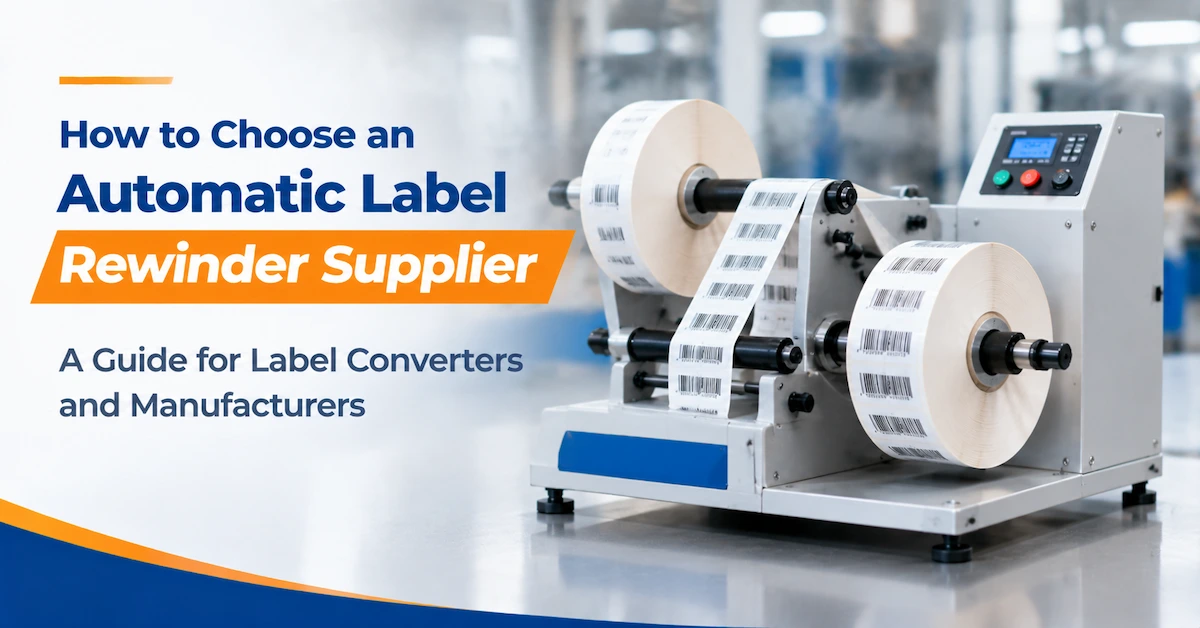
An automatic label rewinder takes a continuous web of labels or other printed material and winds it into a controlled finished roll. Depending on the process, the incoming web may come from a label slitting machine, digital or flexographic printing line, thermal printing station, inspection system, or manual roll. The rewinder controls how that web is collected so that the finished roll has an acceptable edge, tension, direction, and quantity.
In practical production terms, the rewinder creates a usable handoff between two processes. The upstream process creates or converts the web. The rewinder prepares a roll that the downstream process can store, transport, dispense, apply, or print. That handoff is where many purchasing risks appear: a roll can look acceptable from the outside while hiding telescoping, crushed cores, slack layers, adhesive contamination, splice problems, or a count mismatch.
| Rewinding requirement | What the equipment must control | What the buyer should verify |
|---|---|---|
| Stable web movement | Drive speed, acceleration, braking, and material guidance. | Whether the machine maintains tracking with the actual liner, adhesive, and label width. |
| Consistent roll tension | Torque, dancer or tension feedback, clutch behavior, and winding profile. | Whether inner, middle, and outer layers remain firm without stretching or crushing the web. |
| Clean edges | Alignment, core centering, shaft runout, and web lateral control. | Edge offset tolerance on the finished roll and the inspection method used to measure it. |
| Repeatable quantity | Label counting, length measurement, mark sensing, or job-based stopping. | How the machine handles variable label pitch, gaps, splices, and counter correction. |
| Fast changeover | Core loading, shaft adjustment, roll removal, settings recall, and safety access. | Actual changeover time for the product mix rather than an empty-machine demonstration. |
| Downstream compatibility | Winding direction, roll diameter, core specification, and packing format. | Whether the finished roll runs on the customer's dispenser, applicator, printer, or inspection line. |
The term automatic can mean different things in different quotations. It may refer to motorized winding, automatic counting, automatic stopping, automatic tension adjustment, automatic roll change, or a complete inline system. Ask the supplier to define which functions are included in the proposed configuration. A motorized shaft alone does not prove that the finished rolls will meet a production tolerance. The phrase label winding equipment should therefore be tied to a stated roll format, operating range, and acceptance test.
Why This Is a Supplier-Selection Question, Not Only a Machine Question
A rewinder is a mechanical system, but the procurement risk includes materials, process knowledge, integration, documentation, and after-sales support. Two machines with similar width and speed ratings can produce different results because their tension control, shaft design, sensors, operator interface, and material guidance are different. The supplier's ability to test your web may matter more than a higher headline speed.
Supplier capability should match your application
A label converter may need narrow rolls, frequent changeovers, multiple core diameters, and precise label counting. A large packaging operation may prioritize long continuous runs, large finished rolls, web stability, and integration with a slitter or inspection system. A warehouse or distributor may need simple rewinding for repacking, private-label roll formats, or a compact machine that can be operated by one person. The same phrase, automatic label rewinder, can describe very different production requirements.
Equipment and consumables should be discussed together
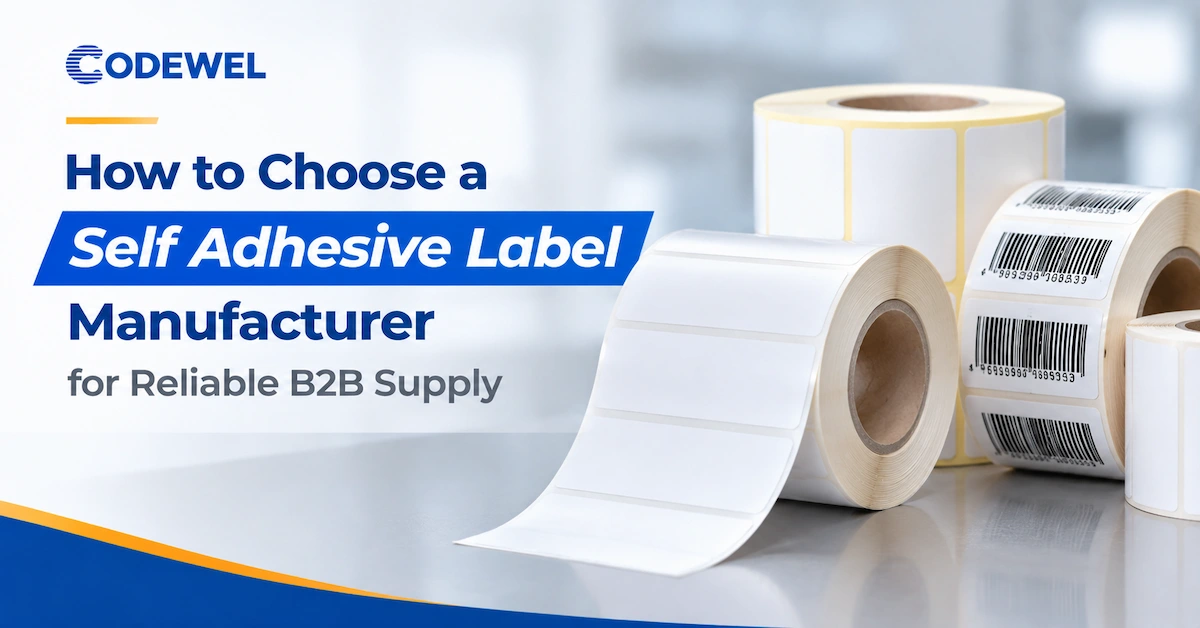
The finished web may include paper labels, synthetic labels, linerless material, transparent film, thermal media, or adhesive constructions with different friction and stretch behavior. A supplier who only asks for maximum width may not have enough information to select the right winding method. If the roll will later be printed by thermal transfer, the supplier should also understand the label surface, ribbon, print direction, and required unwind orientation. Codewel's self-adhesive label and label jumbo roll categories are useful starting points for discussing the material side of the project.
Commercial support is part of machine uptime
Even a well-designed rewinder can become a bottleneck if the supplier cannot provide clear manuals, electrical information, wearing-part identification, troubleshooting guidance, and response ownership. Before ordering, confirm who handles installation questions, which parts are considered consumables, how replacement sensors or shafts are specified, and whether remote support is available for the destination market. Do not treat a machine quote as complete until the operating and service boundary is clear.
How to Define the Finished Roll Before Requesting a Quote
The most useful RFQ begins with the finished roll, then works backward to the machine. If the supplier knows what the downstream process accepts, it can evaluate the right shaft, core adapter, winding direction, counting method, and tension range. The following fields should be included in a technical data sheet.
| RFQ field | Information to provide | Why it affects the recommendation |
|---|---|---|
| Material structure | Paper, PET, PP, PE, thermal media, linerless stock, adhesive, liner, or laminated construction. | Friction, stretch, stiffness, adhesive exposure, and surface behavior affect tracking and tension. |
| Web width | Minimum, maximum, normal operating width, and whether multiple lanes are slit together. | Determines shaft length, web guiding, edge control, and usable production range. |
| Label pitch | Label length, gap, black mark, perforation, splice, and repeat pattern. | Determines counting and stopping logic when quantity is controlled by labels rather than length. |
| Core | Core inside diameter, core width, material, tolerance, and whether core adapters are needed. | Controls concentricity, torque transfer, roll removal, and compatibility with the next machine. |
| Finished roll | Target outside diameter, maximum weight, roll width, winding direction, and edge tolerance. | Defines shaft load, motor torque, packaging, transport, and downstream fit. |
| Production volume | Rolls per shift, web length per job, operating hours, changeovers, and peak demand. | Separates a compact workstation from a continuous industrial configuration. |
| Quality tolerance | Edge offset, tension feel, label damage limit, count accuracy, splice handling, and visual standard. | Turns the phrase high quality into measurable acceptance criteria. |
| Line connection | Standalone, inline with a slitter, behind a printer, connected to inspection, or feeding a dispenser. | Determines signals, speed synchronization, sensor placement, and fault recovery. |
Include photographs or a short video of the current roll problem when possible. A supplier can learn more from a telescoped roll, a crushed core, or an adhesive-contaminated edge than from a general statement such as the machine must be stable. Provide both a normal sample and a difficult sample, because a machine that handles only the easiest stock may fail when the product mix changes.
Core size and winding direction are not minor details
The core determines how the roll is mounted, how torque is transferred, and whether the roll can be removed without damaging the web. Winding direction determines how the label face, adhesive, leading edge, or printed image is presented to the next operation. A roll can be wound tightly and still be unusable if it is wound in the wrong direction or onto the wrong core.
Finished diameter affects every downstream process
A larger roll can reduce changeovers, but it adds weight and inertia. That affects acceleration, braking, shaft loading, tension response, operator handling, and packaging. If the roll will be placed into a dispenser or applicator, the maximum outside diameter and width may be fixed by that equipment. Ask the supplier to test the intended maximum roll rather than demonstrating only a small sample.
Which Automatic Label Rewinder Configuration Fits the Process?
There is no universal configuration. The practical choice depends on whether the rewinder is a standalone finishing station, an inline module, or part of a wider label converting system. Buyers should compare the process boundary instead of assuming that all equipment sold under the same product name has the same function.
Standalone rewinding station
A standalone station is suitable when printed or slit rolls are brought to the operator and rewound into a specified format. It can be useful for repacking, small-batch converting, roll correction, and flexible production. The main evaluation points are operator setup, safe access, repeatable settings, counting, and the time required to change cores and materials.
Inline slitting and rewinding
When a rewinder follows a label slitting machine, the two machines must share information about web width, lane position, speed, tension, and job completion. Slitting can change the number of lanes and the edge condition of the web. The rewinder must collect those lanes without introducing drift or uneven roll hardness. Confirm which supplier owns the interface and who is responsible for testing the complete line.
Rewinding for dispensing or application
If the finished rolls feed a label dispenser or an applicator, the winding direction, label gap, edge alignment, roll diameter, and liner behavior become especially important. A roll that is acceptable for storage may not feed smoothly through a dispenser. Codewel's Label Dispenser category can be used to discuss the downstream format, but compatibility with a particular dispenser or applicator should be confirmed by a sample run.
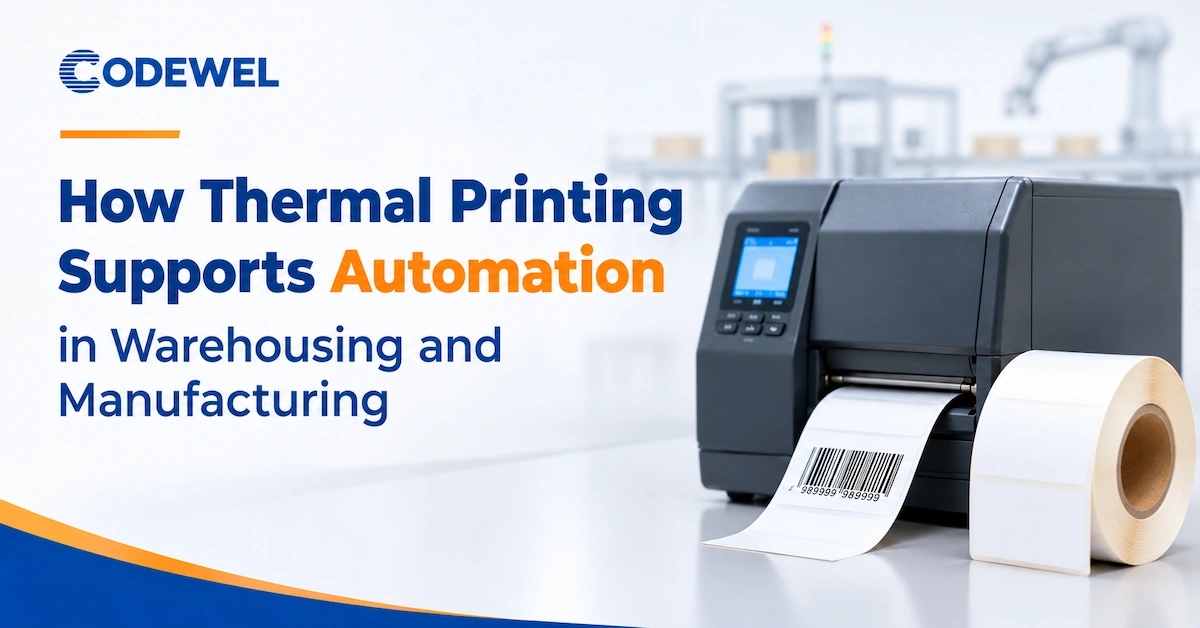
Rewinding for thermal printing workflows
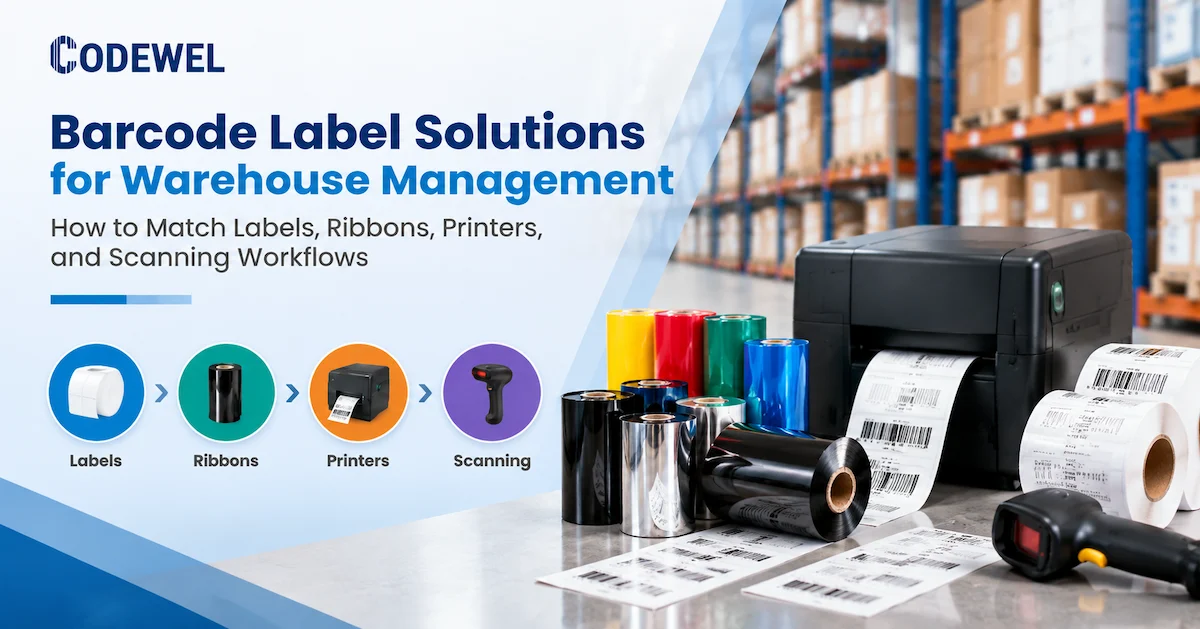
Some buyers rewind blank or pre-printed labels that will later run through a thermal printer. In that case, the finished roll should not introduce telescoping, wrinkles, edge damage, excessive curl, or inconsistent pitch. These defects can affect sensing, registration, printhead contact, barcode quality, and the printer's ability to advance labels accurately. The broader printer, barcode ribbon, and printing consumables categories provide context for a complete label-printing discussion.
How to Evaluate Tension, Edge Alignment, and Roll Hardness
Winding quality is the technical center of an automatic label rewinder evaluation. A finished roll should be firm enough to transport and unwind, but not so tight that it stretches the liner, distorts the label, crushes the core, or creates adhesive transfer. It should also maintain a consistent edge rather than gradually moving sideways as the diameter increases.
Web tension
Web tension is the pulling force applied to the material during winding. Too little tension can create loose layers, wrinkles, and telescoping. Too much tension can stretch thin films, deform the liner, crush the core, or change the label pitch. The correct operating range depends on material construction, width, thickness, adhesive, speed, and finished diameter. A supplier should explain how tension is generated and controlled rather than describing it only as stable.
Edge alignment
Edge alignment is affected by web guiding, core centering, shaft runout, material variation, and operator setup. Ask how the supplier measures edge offset and what tolerance can be achieved with the actual material. If the roll will run in a downstream printer or applicator, define whether the tolerance is measured at the inner layers, outer layers, or across the finished roll.
Roll hardness and compression
Roll hardness is often judged by touch, but a serious acceptance test should describe the visual and functional limits. Check for soft zones, crushed edges, core deformation, blocking, label lifting, adhesive squeeze-out, and changes in winding hardness from the core to the outside. If the supplier uses a hardness gauge or another measurement method, record the test location and conditions so repeat orders can be compared.
What Should an Automatic Label Rewinder Supplier Test?
A credible supplier should be willing to test the buyer's material and document the conditions. A sample run does not need to simulate every future product, but it should include the normal operating point and the edge of the expected range. Test results should identify the material, core, width, speed, roll diameter, winding direction, tension setting, and stopping method.
| Test | Procedure | Acceptance evidence |
|---|---|---|
| Normal roll test | Run the most common label stock at the target speed and finished diameter. | Roll photos, dimensions, edge tolerance, tension setting, and operator notes. |
| Minimum-width test | Run the narrowest expected web or lane configuration. | Tracking stability, edge quality, count behavior, and no material damage. |
| Maximum-roll test | Run the largest planned diameter and weight within the quotation. | Acceleration, braking, shaft load, roll removal, and final roll hardness. |
| Counting test | Use the actual gap, mark, pitch, splice, or length method used for the job. | Count accuracy, stopping position, and documented response to a missed mark. |
| Unwind test | Place the finished roll into the next printer, dispenser, inspection unit, or applicator. | No skew, slip, label lift, liner break, or incorrect presentation direction. |
| Fault-recovery test | Simulate material end, sensor error, emergency stop, power interruption, and job change. | Known restart state, operator message, safe recovery, and no hidden roll damage. |
| Repeatability test | Run multiple rolls from the same job and compare the output. | Consistent edge, tension, count, diameter, and winding direction across rolls. |
Ask for the rejected sample as well as the accepted sample. A supplier that can show what failed, why it failed, and what setting was changed demonstrates a stronger engineering process than a supplier that only shows a perfect roll. For private-label or distributor programs, retain the approved roll specification and test photos as a reference for future batches.
How to Assess the Supplier Beyond the Machine Quote
A supplier review should cover the company's ability to support the entire purchase lifecycle. The machine may be the largest line item, but material testing, documentation, packaging, spare parts, and communication determine whether the investment remains useful after installation.
Manufacturing and engineering transparency
Ask whether the supplier manufactures the equipment, integrates third-party modules, or resells a standard machine. Each model can be commercially valid, but the support path is different. Request a basic system description, the critical wearing parts, the control components, the expected maintenance points, and the limits of the supplier's responsibility.
Material and process knowledge
The supplier should be able to discuss paper, film, liner, adhesive, roll width, core, finished diameter, tension, and downstream use in one conversation. A supplier that only asks for voltage and maximum speed may be missing the most important application risks. For label converters, material knowledge is often the difference between a machine that runs a sample and a machine that runs the product mix.
Documentation and change control
Request the user manual, electrical information, operating limits, recommended cleaning method, parts list, and setup procedure before final approval where possible. If the supplier changes a motor, sensor, controller, shaft, or software version, ask how the change is recorded and communicated. Repeat orders and service calls become difficult when the delivered machine is not traceable to a documented configuration.
Spare parts and service boundary
Clarify which parts should be stocked locally and which parts are supplied from the factory. A spare-parts plan may include belts, bearings, sensors, clutches, shafts, core adapters, control components, and safety devices, but the exact list depends on the design. Codewel's printer spare parts category is relevant to the wider printing ecosystem, while rewinder-specific parts and service terms must be confirmed separately.
Export and packaging readiness
For international buyers, request the packed dimensions, gross weight, crate or carton method, installation accessories, electrical requirements, and documents needed by the importing country. Confirm whether the quotation includes commissioning support, training, or only equipment delivery. These details affect the landed cost and the time required to put the machine into operation.
What Is the Total Cost of an Automatic Label Rewinder?
The purchase price is only one part of the cost. Compare the cost of accepted finished rolls, not only the machine price. A lower-priced rewinder can become more expensive if it requires extra labor, produces more waste, needs frequent adjustment, or cannot run the actual material at the required speed.
| Cost area | Questions for the supplier | Potential hidden impact |
|---|---|---|
| Machine and options | Which shaft, guide, counter, sensor, safety system, and control functions are included? | Required options may be added after the initial price comparison. |
| Material waste | What is the expected setup waste and how are splices or damaged sections handled? | Waste can exceed the difference between two machine prices over time. |
| Labor | How many operators and how much setup time are needed per job? | Slow changeovers reduce effective capacity even when rated speed is high. |
| Energy and utilities | What electrical power, air, extraction, or environmental conditions are required? | Installation work and utility changes increase project cost. |
| Maintenance | Which parts wear, how often are they inspected, and what is the service method? | Unplanned stoppage can affect delivery more than routine parts cost. |
| Downstream compatibility | Can the finished roll run without manual correction in the next process? | Rework, rejects, and feed failures reduce the value of the rewinder. |
| Support and training | What installation, training, troubleshooting, and response support is included? | Unclear support creates delay during commissioning and production ramp-up. |
For a distributor, the total cost also includes packaging, repeatability, documentation, warranty handling, and the ability to support customers in different applications. For a converter, the most important number may be productive meters or accepted rolls per shift. Use the metric that reflects the business constraint instead of comparing the supplier's maximum speed in isolation.
RFQ Checklist for an Automatic Label Rewinder Supplier
Send the following information with a request for quotation. It gives the supplier enough context to respond with a technically useful proposal and makes different quotations easier to compare.
- Application: describe whether the rewinder is for labels, printed film, thermal media, liner, tickets, tags, or another web.
- Material: state face stock, liner, adhesive, thickness if known, surface treatment, and whether the material can stretch or curl.
- Web format: provide minimum and maximum width, number of lanes, label pitch, gap, mark, perforation, splice, and winding direction.
- Core format: provide inside diameter, core width, core material, tolerance, and required adapters.
- Roll target: provide finished outside diameter, maximum weight, label count or length, edge tolerance, and hardness expectation.
- Production profile: state rolls per hour, operating shifts, peak volume, expected changeovers, and future capacity needs.
- Line position: identify upstream and downstream equipment, including a slitter, printer, inspection unit, dispenser, applicator, or packing station.
- Control and signals: ask about speed reference, start and stop signals, sensor inputs, counter method, alarms, and restart behavior.
- Acceptance: define the material sample, test speed, roll diameter, count tolerance, edge tolerance, unwind test, and fault scenarios.
- Commercial terms: request model or configuration, included options, MOQ if applicable, sample policy, lead time, packing, warranty, payment, and service scope in writing.
Include a clear statement that unknown values must be marked as "to be confirmed" rather than filled with a typical industry assumption. This protects both sides. The supplier can identify the data still needed, and the buyer can distinguish a verified commitment from a preliminary recommendation.
Common Buying Mistakes to Avoid
Choosing by maximum speed alone
Maximum speed is usually measured under defined material, roll, and operating conditions. A difficult adhesive, narrow web, large diameter, or frequent stop-start cycle may require a lower practical speed. Ask for the expected productive speed with the actual material and finished roll.
Ignoring the downstream unwind direction
The correct winding direction depends on how labels or printed images must present to the next process. Confirm the orientation with a physical sample and a simple drawing. Do not leave the decision to a last-minute operator adjustment.
Assuming automatic means automatic roll change
Automatic winding, automatic counting, and automatic roll change are different functions. Make each function explicit in the RFQ. If the application needs non-stop production or an automatic transfer, request a demonstration of that exact sequence.
Testing only one easy material
A supplier may successfully run a stable paper label while the production mix also includes thin film, transparent stock, or adhesive constructions. Test the normal material and the material most likely to expose tracking or tension weaknesses.
Failing to define acceptable roll quality
Terms such as tight roll, neat edge, high precision, and stable tension are not measurable enough for a purchase contract. Convert them into edge offset, diameter, count, hardness, unwind, and visual criteria.
Buying the machine before confirming the service boundary
Clarify installation, training, troubleshooting, warranty, spare parts, and response ownership before the purchase order. This is particularly important when the supplier, local integrator, and end user are in different countries.
Maintenance and Operator Controls
Maintenance should protect the winding path and the repeatability of the finished roll. Dust, adhesive residue, damaged cores, worn bearings, guide contamination, sensor misalignment, and loose mechanical connections can gradually change roll quality. A basic maintenance plan should be included in the operating documentation rather than created only after a failure.
- Inspect the core shaft, adapters, chucks, and locking mechanism before each production run.
- Keep the web path, guide surfaces, sensors, and rollers clean and free from adhesive buildup.
- Check edge alignment and roll hardness at the beginning of a job and after a material or core change.
- Record tension, speed, count method, material lot, and finished diameter for repeat jobs.
- Replace damaged cores and isolate material with splices or adhesive contamination rather than forcing it through the machine.
- Test emergency stop and restart behavior according to the supplier's safety procedure.
- Keep a spare-parts list with part numbers, photos, and the responsible purchasing contact.
Operator training should explain not only how to load a roll, but also how to recognize a tension problem, a tracking problem, a counting problem, and a material problem. Clear fault categories reduce unnecessary setting changes and help the supplier diagnose repeat failures from production records.
Frequently Asked Questions
What should I ask an automatic label rewinder supplier first?
Start with the finished roll requirements: material, web width, label pitch, core, winding direction, target diameter, count, edge tolerance, production volume, and downstream equipment. These fields allow the supplier to define a workable configuration instead of quoting a generic motorized rewinder.
What is the difference between a label rewinder machine and a label slitter?
A slitter divides a wider web into narrower lanes or rolls. A rewinder collects and controls the web into a finished roll. Many production lines use both, but the machines have different responsibilities and should be tested together when they operate inline.
Can a rewinder handle thermal labels?
It may, but compatibility depends on the thermal media construction, liner, adhesive, width, pitch, core, roll diameter, and required tension. Test the actual material and confirm that the finished roll can feed the intended thermal printer, dispenser, or applicator without skew or damage.
How do I know whether the finished roll is acceptable?
Define measurable criteria for edge offset, outside diameter, count, winding direction, hardness, visual damage, and downstream unwind performance. A roll should be tested in the next process, not judged only by its appearance on the rewinder shaft.
Does automatic mean the machine changes rolls without an operator?
No. In a quotation, automatic may describe motorized winding, automatic counting, automatic stopping, tension adjustment, or automatic roll change. Ask the supplier to list each function separately and demonstrate the functions that are required for your production line.
What samples should I send to a supplier?
Send a normal production sample, the most difficult material in the product mix, representative cores, and a drawing or photo of the required finished roll. Include a sample with the real label pitch, adhesive, liner, splice, or printed surface whenever possible.
What should be included in the acceptance test?
Include normal and difficult materials, target speed, minimum and maximum width, target roll diameter, count accuracy, edge alignment, tension or hardness criteria, unwind performance, changeover, emergency stop, material end, and restart behavior. Keep the approved samples and test conditions for future reference.
Does Codewel publish a specific rewinder model and price?
Codewel's public site includes a Label Rewinder product collection, but the captured collection does not currently list a specific model. Buyers should send the application and roll specification to confirm the current configuration, availability, MOQ, lead time, and commercial terms rather than assuming them from the category name.
Conclusion
Selecting an automatic label rewinder supplier is a process-engineering decision. The best supplier is the one that can connect the finished roll requirement to material behavior, tension control, edge alignment, counting, winding direction, downstream compatibility, testing, documentation, and service. A high speed rating is useful only when the machine can produce accepted rolls at the required speed and repeat the result across the actual product mix.
For a reliable purchase, prepare a complete RFQ, send representative samples, define measurable roll-quality criteria, and require a documented test before approval. Codewel's public Label Rewinder, Machine, Label Slitting Machine, and label-material categories provide a starting point for the discussion. The final machine configuration, product availability, MOQ, lead time, and support scope should be confirmed directly for the intended application.