
No.2 Tongshanxi Road, Zhongtai Street,YuHang District,HangZhou, CN.
logo

How to Choose a Reliable Resin Ribbon Supplier for Industrial Printing

  • Barcode Printing Solutions
  • Thermal Transfer Ribbon Manufacturing
Posted by CODEWEL On Aug 19 2026

Why Choosing the Right Resin Ribbon Supplier Matters

In thermal transfer printing, ribbon selection directly affects barcode readability, label durability, and long-term identification performance.

For businesses operating in industries such as:

  • Automotive
  • Electronics
  • Healthcare
  • Chemical manufacturing
  • Industrial equipment
  • Logistics

labels often need to withstand:

  • Abrasion
  • Chemicals
  • Heat
  • Moisture
  • Outdoor exposure
  • Long-term handling

In these environments, resin ribbon is often selected because it provides stronger durability compared with standard wax-based ribbons.

However, choosing the right resin ribbon supplier is just as important as choosing the ribbon itself.

A reliable supplier should provide:

  • Stable ribbon quality
  • Consistent production batches
  • Technical product support
  • Printer compatibility guidance
  • OEM customization
  • Long-term supply capability

CODEWEL provides professional thermal transfer ribbon solutions designed for industrial barcode printing applications.
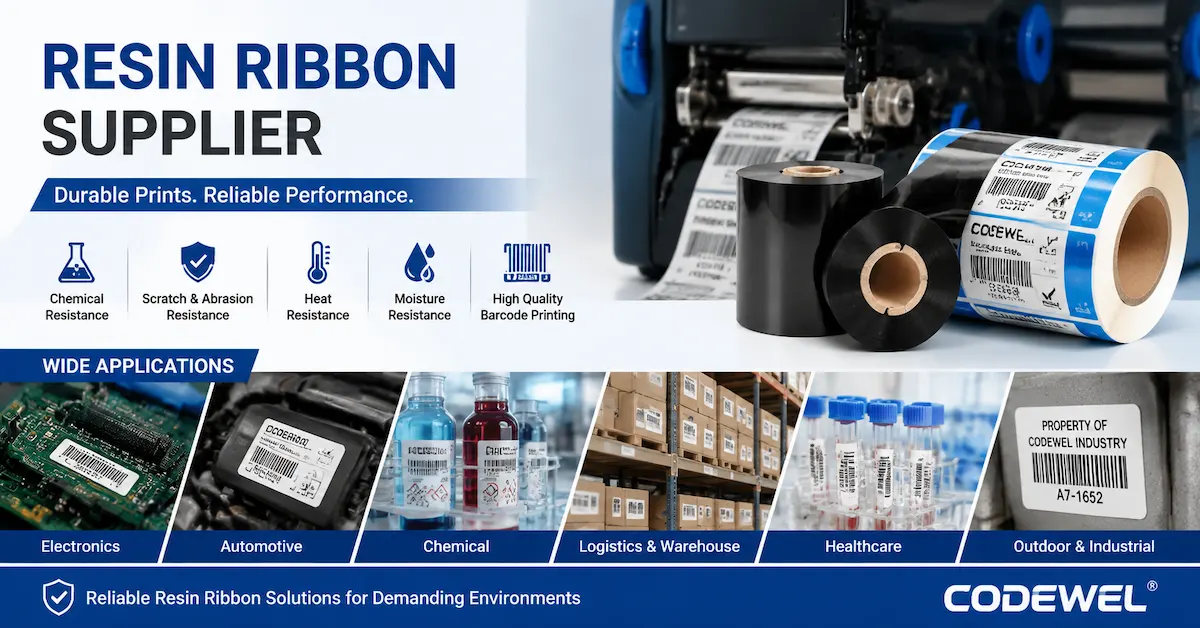
resin ribbon supplier

What Is a Resin Ribbon?

A resin ribbon is a high-performance thermal transfer ribbon designed for applications requiring strong resistance and long-lasting print quality.

Unlike wax ribbons that focus on economical printing, resin ribbons use a resin-based ink formulation to create a stronger bond with synthetic label materials.

During thermal transfer printing:

  1. The printer printhead applies controlled heat.
  2. The resin ink layer melts.
  3. The ink transfers onto the label surface.
  4. The printed image becomes highly durable.

Resin ribbons are commonly used with:

  • PET labels
  • PP labels
  • PVC labels
  • Synthetic films
  • Specialty industrial materials

Resin Ribbon vs Wax Ribbon: Understanding the Difference

Many buyers compare resin ribbons and wax ribbons because they serve different application requirements.

The correct choice depends on:

  • Label material
  • Environmental conditions
  • Required durability
  • Printing volume
  • Budget considerations
Feature Wax Ribbon Resin Ribbon
Ink Type Wax-based Resin-based
Cost Lower Higher
Durability Basic Excellent
Scratch Resistance Limited High
Chemical Resistance Limited Excellent
Heat Resistance Low High
Best Labels Paper labels Synthetic labels
Typical Use Shipping, retail Industrial, medical, automotive

Wax ribbons are suitable for general-purpose labels where cost efficiency is the priority.

Resin ribbons are designed for applications where labels must remain readable under demanding conditions.

Key Advantages of Resin Thermal Transfer Ribbon

Excellent Scratch and Abrasion Resistance

One of the main reasons companies choose resin ribbon is durability.

Printed labels may experience:

  • Repeated handling
  • Mechanical friction
  • Transportation impact
  • Equipment contact

Resin ribbons create a strong printed layer that helps maintain barcode readability.

This makes them suitable for:

  • Asset tracking labels
  • Automotive components
  • Industrial equipment labels

Strong Chemical Resistance

Many industrial environments expose labels to:

  • Oils
  • Cleaning agents
  • Solvents
  • Industrial chemicals

Resin ribbon provides better resistance compared with wax-based alternatives.

Industries requiring chemical-resistant identification often choose resin solutions.

High-Resolution Printing Performance

Resin ribbons are suitable for applications requiring:

  • Small text
  • Fine barcodes
  • Detailed graphics
  • High-density information

Common applications include:

  • Electronic components
  • Medical device labels
  • Laboratory identification

Excellent Synthetic Label Compatibility

Resin ribbons perform best on synthetic materials such as:

  • Polyester (PET)
  • Polypropylene (PP)
  • Polyethylene (PE)

These materials are commonly used when labels require:

  • Waterproof performance
  • Outdoor durability
  • Long service life

Common Applications of Resin Ribbon

A professional resin ribbon supplier should understand different industry requirements.

Automotive Labeling

Automotive components often require identification labels that survive:

  • Heat exposure
  • Oil contamination
  • Mechanical wear

Resin ribbon is commonly used for:

  • Engine component labels
  • Parts tracking
  • Compliance labels

Electronics Manufacturing

Electronic products require precise and durable identification.

Applications include:

  • PCB labels
  • Component tracking
  • Serial number labels
  • Product identification

Resin ribbons provide:

  • Sharp printing
  • Long-term readability
  • Resistance against handling damage

Healthcare and Laboratory Labels

Medical and laboratory environments require accurate identification.

Resin ribbon supports applications such as:

  • Sample identification
  • Equipment labels
  • Pharmaceutical tracking

Important requirements include:

  • Clear barcode scanning
  • Resistance to cleaning processes
  • Stable printing quality

Chemical Industry Applications

Chemical containers require labels that can withstand challenging environments.

Resin ribbons are suitable for:

  • Chemical drums
  • Hazard labels
  • Industrial containers

Advantages include:

  • Chemical resistance
  • Strong adhesion
  • Long-term readability

How to Select a Resin Ribbon Supplier

Choosing a supplier requires evaluating more than product price.

Product Knowledge and Technical Support

A professional supplier should understand:

  • Printer compatibility
  • Label materials
  • Ribbon specifications
  • Printing conditions

The supplier should help customers select:

  • Ribbon width
  • Length
  • Core size
  • Ink side
  • Suitable resin formulation

Manufacturing Capability

A reliable resin ribbon supplier should control:

  • PET film selection
  • Resin coating process
  • Back coating technology
  • Slitting accuracy
  • Quality inspection

Manufacturing consistency ensures every production batch delivers similar performance.

Quality Control Process

Important quality checks include:

Quality Item Purpose
Coating Uniformity Ensure stable printing
Ribbon Width Match printer requirements
Roll Length Ensure quantity accuracy
Printing Test Verify output performance
Surface Quality Reduce printing issues

OEM Resin Ribbon Solutions

For distributors and private-label brands, OEM capability is an important factor.

A professional supplier may support:

  • Custom ribbon sizes
  • Customized packaging
  • Private labels
  • Brand identification
  • Bulk production

OEM solutions help businesses build their own thermal printing product lines.

Why Choose CODEWEL as Your Resin Ribbon Supplier?

CODEWEL provides thermal transfer printing solutions for global B2B customers.

The product range includes:

  • Wax Ribbon
  • Wax Resin Ribbon
  • Resin Ribbon
  • TTO Ribbon
  • Wash Care Resin Ribbon

CODEWEL supports customers with:

  • Product selection assistance
  • OEM cooperation
  • Bulk supply
  • Application recommendations
  • Technical support

For customers requiring durable printing performance, CODEWEL provides resin ribbon products for industrial and commercial applications.

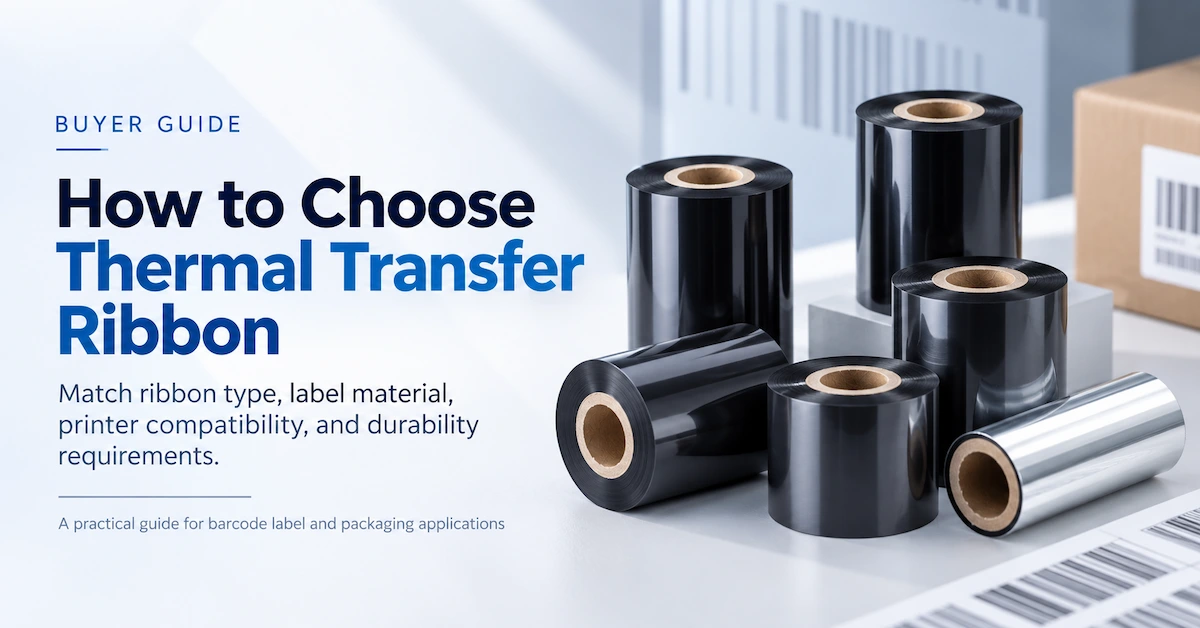
Buyers can also explore thermal transfer ribbon solutions for complete barcode printing requirements.
How to Select the Right Resin Ribbon Specification

Selecting the correct resin ribbon specification is important for achieving stable printing performance.

A professional resin ribbon supplier should help customers evaluate several key factors before purchasing.

Printer Compatibility

The first step is confirming printer compatibility.

Important information includes:

  • Printer brand
  • Printer model
  • Printhead type
  • Printing speed
  • Maximum print width

Common thermal transfer printer brands include:

  • Zebra
  • TSC
  • Honeywell
  • SATO
  • Datamax
  • Godex
  • Toshiba
  • Citizen

Although many resin ribbons can work with different printer brands, the correct specification depends on the actual printer configuration.

Label Material Selection

Resin ribbon performance depends strongly on the label substrate.

Common compatible materials include:

PET Labels

PET labels are widely used in demanding environments because they provide:

  • Heat resistance
  • Chemical resistance
  • Outdoor durability

Resin ribbon is often selected for PET labels used in:

  • Automotive parts
  • Electronics
  • Industrial equipment

PP Labels

Polypropylene labels provide:

  • Moisture resistance
  • Flexible performance
  • Good durability

Applications include:

  • Packaging
  • Chemical containers
  • Product identification

PVC Labels

PVC labels are used when flexibility and durability are required.

Resin ribbons help maintain:

  • Clear printing
  • Strong adhesion
  • Long-term readability

Ribbon Width and Length Selection

Choosing the correct ribbon size improves printing efficiency.

Important specifications include:

  • Ribbon width
  • Ribbon length
  • Core size
  • Roll direction

A ribbon width should generally match the printable area while avoiding unnecessary material waste.

Incorrect sizing may cause:

  • Poor coverage
  • Ribbon wrinkles
  • Printer adjustment issues

Ink Side Selection

Thermal transfer ribbons are commonly available with:

  • Ink side in
  • Ink side out

The correct selection depends on the printer structure.

Before ordering, buyers should confirm the printer requirements with their resin ribbon supplier.

Resin Ribbon Cost Factors

Many buyers focus only on the purchase price of resin ribbons.

However, the actual cost includes:

  • Ribbon price
  • Printing efficiency
  • Label waste
  • Equipment maintenance
  • Replacement frequency

A higher-quality resin ribbon may provide better overall value because it reduces:

  • Printing failures
  • Reprints
  • Barcode scanning problems
  • Production interruptions

Factors Affecting Resin Ribbon Pricing

Factor Impact on Cost
Ribbon Width Larger widths require more material
Ribbon Length Longer rolls affect unit pricing
Resin Formula Higher performance formulations cost more
Order Quantity Bulk orders usually reduce cost
Packaging Customized packaging affects pricing
OEM Requirements Private labeling changes production cost

A professional supplier should provide pricing based on complete specifications rather than only ribbon size.

Common Mistakes When Buying Resin Ribbon

Choosing the Wrong Ribbon Type

One common mistake is using resin ribbon when wax ribbon would be sufficient, or using wax ribbon in a demanding environment.

Incorrect selection may result in:

  • Higher costs
  • Poor printing performance
  • Reduced label durability

A supplier should recommend products based on the application.

Ignoring Label Material Compatibility

The same ribbon may perform differently on different materials.

For example:

  • Paper labels may work well with wax ribbon.
  • PET labels usually require resin ribbon.

Testing the actual label material before bulk purchasing reduces risk.

Buying Only Based on Lowest Price

The cheapest option may create additional costs through:

  • Poor barcode readability
  • Increased waste
  • Printer adjustments
  • Customer complaints

Professional buyers should evaluate:

  • Product consistency
  • Technical support
  • Manufacturing capability
  • Long-term reliability

How CODEWEL Supports Resin Ribbon Customers

CODEWEL provides thermal transfer printing solutions for companies requiring reliable barcode identification performance.

The company supports different customer requirements, including:

  • Industrial labeling
  • Manufacturing identification
  • Logistics applications
  • OEM projects
  • Bulk purchasing

Customers can explore CODEWEL's resin ribbon products for durable thermal transfer printing applications.

For customers comparing different ribbon types, CODEWEL also provides thermal transfer ribbon solutions covering wax, wax resin, resin, TTO, and wash care ribbon categories.

Why Partner With CODEWEL as a Resin Ribbon Supplier?

Choosing a long-term ribbon partner requires evaluating supplier capability beyond the product itself.

Stable Manufacturing Capability

A reliable supplier should maintain:

  • Consistent raw materials
  • Controlled coating processes
  • Accurate slitting
  • Stable production batches

This helps customers maintain the same printing results across repeat orders.

Technical Application Support

Resin ribbon selection depends on multiple factors.

CODEWEL can support customers with:

  • Printer matching
  • Label material evaluation
  • Ribbon specification recommendations
  • Application requirements

OEM and Private Label Support

For distributors and brands, CODEWEL can support customized requirements such as:

  • Ribbon dimensions
  • Packaging design
  • Product labeling
  • Bulk production

OEM cooperation allows businesses to create customized thermal printing product solutions.

Long-Term Supply Reliability

For businesses depending on barcode printing, supply stability is essential.

A professional supplier should provide:

  • Reliable production schedules
  • Consistent product quality
  • Clear communication
  • Long-term cooperation support

Resin Ribbon Supplier Evaluation Checklist

Before selecting a supplier, buyers should review:

Product Capability

✓ Resin ribbon availability
✓ Different specifications supported
✓ Multiple printer compatibility
✓ Application recommendations

Manufacturing Capability

✓ Coating technology
✓ Slitting accuracy
✓ Quality inspection
✓ Batch consistency

Customization Capability

✓ OEM service
✓ Private labeling
✓ Customized packaging
✓ Bulk production

Technical Support

✓ Product selection guidance
✓ Printing troubleshooting
✓ Compatibility support

Supply Capability

✓ Stable production capacity
✓ Reliable delivery
✓ Repeat order consistency

A supplier that meets these requirements can become a reliable long-term partner.

Frequently Asked Questions About Resin Ribbon Suppliers

1. What is a resin ribbon supplier?

A resin ribbon supplier provides thermal transfer ribbons designed for applications requiring durable printing performance, including resistance to abrasion, chemicals, and heat.

2. What makes resin ribbon different from wax ribbon?

Resin ribbon uses resin-based ink designed for synthetic labels and demanding environments, while wax ribbon is mainly used for economical paper label printing.

3. What labels work best with resin ribbon?

Resin ribbons are commonly used with:

  • PET labels
  • PP labels
  • PVC labels
  • Synthetic materials

4. Are resin ribbons suitable for industrial applications?

Yes. Resin ribbons are widely used in automotive, electronics, chemical, manufacturing, and healthcare industries.

5. Can resin ribbons be customized?

Yes. Many suppliers support customization including ribbon width, length, core size, packaging, and private labeling.

6. How do I choose the correct resin ribbon?

Consider:

  • Printer model
  • Label material
  • Printing environment
  • Required durability
  • Ribbon specifications

7. Are resin ribbons more expensive than wax ribbons?

Generally, resin ribbons have higher costs because they provide stronger durability and resistance performance.

8. How can I test resin ribbon quality?

Test samples using your actual printer and labels. Evaluate:

  • Print clarity
  • Barcode readability
  • Scratch resistance
  • Environmental performance

9. Can resin ribbon be used with Zebra printers?

Many resin ribbons are compatible with Zebra printers, but specifications should be confirmed before ordering.

10. How can I request resin ribbon support from CODEWEL?

Customers can provide printer models, label materials, ribbon requirements, and application details through the CODEWEL contact page for product recommendations.

Conclusion

Choosing the right resin ribbon supplier is essential for businesses requiring durable, reliable, and high-quality thermal transfer printing.

A suitable supplier should provide more than products. Buyers should evaluate:

  • Manufacturing capability
  • Ribbon quality
  • Application knowledge
  • OEM support
  • Technical assistance
  • Long-term supply reliability

Resin ribbons are an ideal solution for applications requiring strong resistance to abrasion, chemicals, and harsh environments.

By working with an experienced supplier like CODEWEL, businesses can improve barcode printing reliability, reduce operational risks, and build a more stable thermal transfer printing supply chain.

For resin ribbon sourcing, OEM requirements, or application-specific solutions, contact CODEWEL with your printer model, label material, and purchasing requirements.

Featured Blogs

Tag:

  • Industrial Label Printing
  • Thermal Transfer Printing
  • Barcode Ribbon
  • OEM Ribbon Solutions
  • Resin Ribbon Supplier
  • Resin Thermal Transfer Ribbon
  • Barcode Label Applications
  • Ribbon Selection Guide
Share On
Featured Blogs