
Why Choosing the Right Thermal Transfer Ribbon Supplier Matters
A reliable thermal transfer ribbon supplier provides more than standard printing consumables. For B2B buyers, supplier selection directly affects printing stability, barcode readability, production efficiency, and long-term operating costs.
Thermal transfer ribbons are critical components in barcode identification systems. The ribbon works together with the printer, printhead, label material, and software settings to create clear and durable printed information.
For companies purchasing in bulk, the lowest ribbon price does not always mean the lowest total cost. Poor-quality or unsuitable ribbons may lead to:
- Unreadable barcodes
- Increased label waste
- Frequent printer adjustments
- Faster printhead wear
- Production interruptions
- Higher maintenance costs
A professional supplier should help buyers select the right ribbon formulation, confirm compatibility, provide stable production quality, and support long-term supply requirements.
For distributors, manufacturers, label converters, and barcode solution providers, choosing the right partner is an important part of building a reliable thermal printing supply chain.
What Does a Thermal Transfer Ribbon Supplier Provide?
A thermal transfer ribbon supplier provides ribbon products used in thermal transfer printing systems. During printing, heat from the printhead transfers ink from the ribbon onto labels, packaging films, synthetic materials, or textile substrates.
Unlike direct thermal printing, thermal transfer technology requires a ribbon as the ink carrier.
A complete thermal printing system includes:
- Thermal transfer ribbon
- Barcode printer
- Printhead
- Label material
- Printing software
- Barcode verification process
A qualified supplier should understand how these elements work together instead of simply selling ribbon rolls.
You can review CODEWEL's complete thermal transfer ribbon product range to understand different ribbon categories and applications.
Who Should Work With a Thermal Transfer Ribbon Supplier?
Different buyer groups have different purchasing requirements. Understanding these differences helps companies choose the right supplier model.
Barcode Ribbon Distributors
Distributors usually need suppliers that can provide:
- Stable product availability
- Competitive wholesale pricing
- Multiple ribbon categories
- OEM and private label support
- Consistent repeat orders
- Technical assistance
For distributors, supplier reliability directly affects customer satisfaction because their customers depend on consistent printing performance.
A supplier with a broad product portfolio allows distributors to support different industries without managing multiple sources.
Label Converters and Printing Companies
Label converters often require more technical support because ribbon performance depends heavily on label material.
Their requirements usually include:
- Different ribbon widths
- Customized specifications
- Stable coating quality
- Reliable batch consistency
- Compatibility with various substrates
For example, a label converter producing PET labels may require a different ribbon solution compared with a company producing standard paper shipping labels.
Industrial Manufacturers
Manufacturing companies often use thermal transfer printing for:
- Product identification
- Inventory tracking
- Compliance labels
- Component marking
- Traceability systems
Their main priorities include:
- Long-lasting print quality
- Barcode scanning reliability
- Resistance to industrial environments
- Reduced downtime
Industries such as automotive, electronics, chemical manufacturing, and medical equipment often require higher-performance ribbon solutions.
Barcode Solution Providers
System integrators and automation companies need suppliers that understand complete barcode ecosystems.
They may require:
- Thermal ribbons
- Printers
- Printheads
- Labels
- Barcode scanners
- Technical support
A supplier that understands the complete printing process can provide better recommendations and reduce project risks.
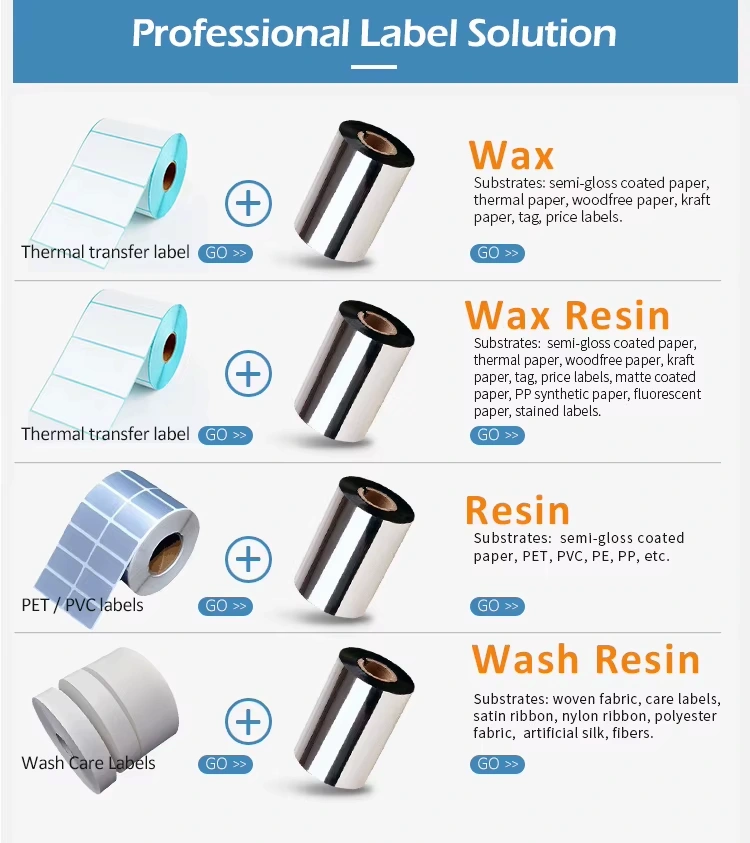
Understanding Different Thermal Transfer Ribbon Types
A professional thermal transfer ribbon supplier should understand that different applications require different ribbon formulations.
The three most common ribbon categories are:
- Wax ribbon
- Wax resin ribbon
- Resin ribbon
Special applications may require:
- TTO near-edge ribbon
- Wash care resin ribbon
Wax Ribbon: Cost-Effective Printing for Paper Labels
Wax ribbon is commonly selected for applications where printing cost and speed are the main priorities.
Typical applications include:
- Shipping labels
- Warehouse labels
- Inventory tags
- Retail labels
- Carton identification
Advantages include:
- Lower cost
- High printing speed
- Good performance on paper materials
- Suitable for general barcode applications
For customers looking for economical barcode printing solutions, CODEWEL provides wax ribbon solutions designed for common thermal transfer applications.
Wax Resin Ribbon: Balance Between Cost and Durability
Wax resin ribbon combines wax and resin properties to provide improved durability compared with standard wax ribbon.
It is often used for:
- Product labels
- Logistics labels
- Manufacturing identification
- Coated paper applications
- Some synthetic materials
Benefits include:
- Better scratch resistance
- Improved adhesion
- Higher durability
- Wider substrate compatibility
For buyers requiring a balance between price and performance, wax resin ribbon solutions are often a practical choice.
Resin Ribbon: High-Durability Printing Applications
Resin ribbon is designed for demanding applications requiring stronger resistance.
Typical applications include:
- Electronics labels
- Automotive identification
- Chemical labels
- Outdoor identification
- Durable asset tracking
Advantages include:
- Excellent abrasion resistance
- Chemical resistance
- Heat resistance
- Long-term readability
For industrial applications requiring stronger performance, buyers can evaluate resin ribbon products based on label material and environmental requirements.
TTO Ribbon for High-Speed Packaging
Thermal transfer overprinting (TTO) ribbons are designed for automated packaging environments.
Common applications include:
- Food packaging
- Pharmaceutical packaging
- Flexible films
- Production line coding
Important selection factors include:
- Printing speed
- Packaging film type
- Adhesion performance
- Machine compatibility
For packaging applications, CODEWEL provides TTO near edge ribbon solutions for specialized printing requirements.
Wash Care Resin Ribbon for Textile Applications
Textile labels require different durability standards compared with ordinary barcode labels.
Wash care resin ribbons are designed for:
- Garment labels
- Care labels
- Laundry identification
- Textile tracking
Required performance includes resistance to:
- Washing
- Dry cleaning
- Ironing
- Repeated handling
CODEWEL offers wash care resin ribbon solutions for textile and industrial laundry applications.
How Thermal Transfer Ribbon Manufacturing Affects Quality
When choosing a thermal transfer ribbon supplier, buyers should evaluate manufacturing capability rather than only finished product appearance.
The production process influences:
- Print consistency
- Ribbon stability
- Printer performance
- Long-term reliability
PET Base Film Quality
The polyester film is the foundation of the ribbon structure.
Important factors include:
- Thickness consistency
- Mechanical strength
- Smooth surface quality
- Heat transfer stability
A stable base film helps maintain consistent ribbon movement during printing.
Ink Coating Technology
The ink layer determines many performance characteristics:
- Print darkness
- Adhesion
- Scratch resistance
- Chemical resistance
- Printing energy requirements
Different formulations are designed for different applications.
Wax formulations prioritize economical printing, while resin formulations focus on durability and harsh environments.
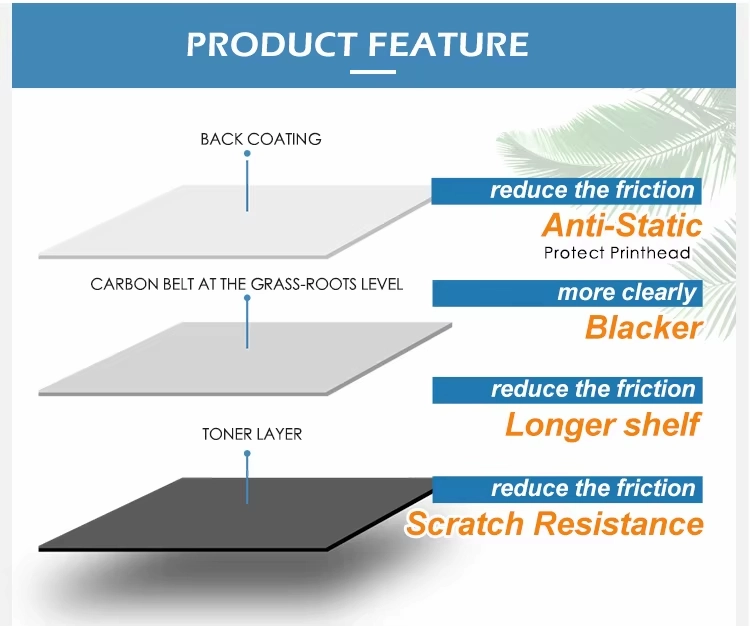
Back Coating Protection
The back coating is an important part of ribbon performance.
A suitable back coating helps:
- Reduce friction
- Protect thermal printheads
- Improve ribbon movement
- Support stable high-volume printing
For industrial users, proper back coating can contribute to longer printhead service life.
Slitting and Rewinding Accuracy
After coating, jumbo rolls are converted into finished ribbon rolls.
Manufacturing accuracy affects:
- Ribbon width
- Edge quality
- Roll tension
- Winding stability
Poor slitting quality may result in:
- Ribbon wrinkles
- Uneven printing
- Feeding problems
- Printer interruptions
For bulk buyers, production consistency is often more important than a single successful sample.
How to Choose Between a Thermal Transfer Ribbon Supplier and a Manufacturer
When sourcing thermal transfer ribbons, buyers often need to decide whether to work directly with a manufacturer or purchase through a distributor.
The best choice depends on:
- Order volume
- Customization requirements
- Technical support needs
- Delivery expectations
- Market strategy
Thermal Transfer Ribbon Manufacturer
A manufacturer directly controls production processes such as:
- Raw material selection
- Coating
- Slitting
- Rewinding
- Quality inspection
- Packaging
Advantages include:
- Better production control
- More customization options
- More stable repeat orders
- Better support for OEM projects
- Direct technical communication
Manufacturers are usually suitable for:
- Importers
- Wholesale distributors
- Private-label brands
- Large industrial users
- Long-term supply agreements
Thermal Transfer Ribbon Distributor
Distributors can provide:
- Faster local availability
- Smaller order quantities
- Multiple brands
- Local customer support
They are suitable for:
- Small-volume buyers
- Urgent replacement needs
- Companies requiring mixed products
However, distributors may have less control over:
- Ribbon formulation
- Production changes
- Packaging customization
- Batch consistency
For companies building a long-term supply chain, working with a capable thermal transfer ribbon manufacturer can provide better control over product quality and specifications.
Verify Thermal Transfer Ribbon Compatibility Before Purchasing
One of the most common purchasing mistakes is selecting a ribbon only based on size or price.
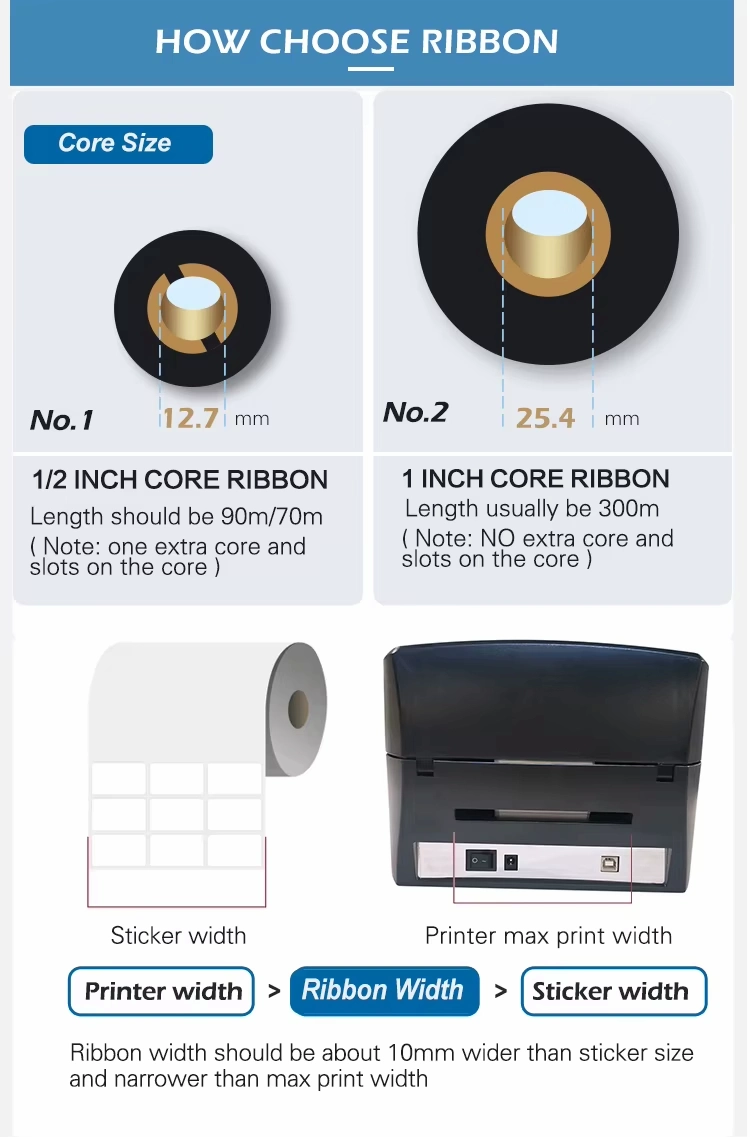
A thermal transfer ribbon must match the complete printing system.
Important compatibility factors include:
- Printer brand and model
- Printhead type
- DPI resolution
- Ribbon width
- Ribbon length
- Core size
- Ink side
- Label material
- Printing speed
- Application environment
A professional supplier should request application information before recommending products.
Printer and Printhead Compatibility
Thermal transfer printing performance depends heavily on the relationship between ribbon and printhead.
A suitable ribbon should work correctly with:
- Desktop barcode printers
- Industrial barcode printers
- TTO printers
- Textile printers
- Packaging coding systems
Different printers may have different requirements for:
- Heat energy
- Printing speed
- Ribbon structure
- Ribbon dimensions
For example, a ribbon designed for standard flat-head barcode printers may not be suitable for high-speed near-edge packaging systems.
Flat-Head vs Near-Edge Thermal Transfer Ribbon
Understanding printing technology helps buyers select the correct ribbon.
Flat-Head Thermal Transfer Printing
Flat-head printers are commonly used for:
- Shipping labels
- Warehouse labels
- Product identification
- Manufacturing labels
They are widely used with:
- Wax ribbon
- Wax resin ribbon
- Resin ribbon
Near-Edge Thermal Transfer Printing
Near-edge technology is mainly used for:
- Flexible packaging
- Food packaging
- Pharmaceutical packaging
- High-speed production lines
It requires specialized ribbons designed for:
- Fast printing speed
- Continuous operation
- Packaging film surfaces
A reliable supplier should confirm the printer technology before recommending ribbon specifications.
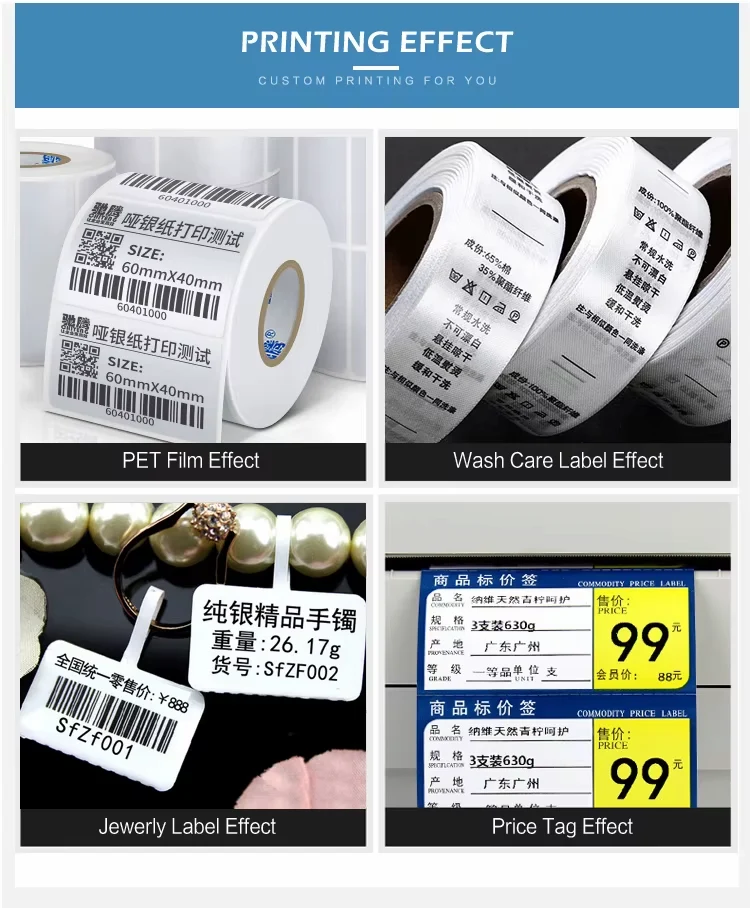
How to Evaluate Thermal Transfer Ribbon Print Quality
Print quality is not only about how dark the barcode looks.
A professional evaluation should consider:
- Barcode readability
- Edge sharpness
- Print consistency
- Scratch resistance
- Smudge resistance
- Adhesion
- Long-term durability
For industrial applications, poor barcode quality can create:
- Scanning failures
- Production delays
- Inventory errors
- Product traceability problems
Thermal Transfer Ribbon Quality Control Process
A professional thermal transfer ribbon supplier should have quality control throughout the production process.
Raw Material Inspection
Before production, suppliers should control:
- PET film quality
- Ink materials
- Back coating materials
- Core quality
Stable raw materials help maintain consistent ribbon performance.
Coating Process Control
The coating process influences:
- Ink transfer performance
- Print density
- Ribbon durability
- Printer compatibility
Important factors include:
- Coating thickness
- Uniformity
- Drying conditions
- Surface quality
Slitting and Rewinding Inspection
Finished ribbon rolls should be checked for:
- Correct width
- Accurate length
- Smooth edges
- Stable winding
- Proper packaging
Poor converting quality may cause:
- Ribbon wrinkles
- Tracking issues
- Uneven printing
OEM and Private Label Thermal Transfer Ribbon Services
For distributors and brand owners, OEM capability is an important supplier selection factor.
A professional OEM thermal transfer ribbon supplier should support customization requirements such as:
| Customization Item | Purpose |
|---|---|
| Ribbon Width | Match different printer models |
| Ribbon Length | Adjust printing efficiency |
| Core Size | Ensure printer installation compatibility |
| Ink Side | Match printer configuration |
| Ribbon Formula | Meet different application needs |
| Packaging Design | Build private-label products |
| Brand Labels | Improve market recognition |
OEM services are especially valuable for:
- Barcode consumable distributors
- Regional brands
- Printing solution companies
- Importers
A reliable OEM partner should maintain approved specifications to ensure future orders remain consistent.
Cost Factors When Choosing a Thermal Transfer Ribbon Supplier
Many buyers compare only the price per roll.
However, the real purchasing cost includes:
Total Cost = Ribbon Price + Printing Waste + Downtime + Maintenance + Replacement Cost
A lower-priced ribbon may create higher costs if it causes:
- Poor print quality
- Increased rejected labels
- Frequent printer adjustments
- Shorter printhead lifespan
Factors Affecting Thermal Transfer Ribbon Cost
| Factor | Impact |
|---|---|
| Ribbon Formula | Resin usually costs more than wax |
| Ribbon Size | Width and length affect unit price |
| Order Quantity | Larger volume may reduce cost |
| Custom Packaging | Influences OEM pricing |
| Shipping Method | Affects total landed cost |
| Product Consistency | Reduces operational waste |
Professional buyers should compare suppliers using the same specification rather than comparing different ribbon types.
How CODEWEL Supports Thermal Transfer Ribbon Buyers
CODEWEL focuses on thermal transfer printing solutions and provides products covering:
- Thermal transfer ribbons
- Barcode printing consumables
- Thermal printers
- Printheads
- Barcode scanners
- Printer spare parts
- Related printing equipment
The company provides multiple ribbon categories, including:
- Wax Ribbon
- Wax Resin Ribbon
- Resin Ribbon
- TTO Near Edge Ribbon
- Wash Care Resin Ribbon
Buyers can explore the complete thermal transfer ribbon product range for different printing applications.
For customers requiring economical paper label printing, CODEWEL provides wax ribbon solutions.
For applications requiring stronger durability, buyers can evaluate wax resin ribbon solutions or resin ribbon products.
For textile and laundry applications, wash care resin ribbon supports durable garment label printing.
For packaging applications, TTO near edge ribbon provides solutions for high-speed coding requirements.
Thermal Transfer Ribbon Supplier Evaluation Checklist
Before selecting a supplier, buyers should confirm:
Product Capability
- Can the supplier provide multiple ribbon types?
- Can they recommend suitable products for different materials?
- Do they understand thermal printing applications?
Manufacturing Capability
- Do they control coating and converting processes?
- Can they maintain stable production batches?
- Can they support long-term supply?
Quality Management
- Are raw materials controlled?
- Are finished products tested?
- Can production batches be traced?
OEM Capability
- Can they customize specifications?
- Can they provide private-label packaging?
- Can they maintain consistent repeat orders?
Technical Support
- Can they analyze printing issues?
- Can they recommend suitable ribbon types?
- Can they support printer compatibility questions?
Frequently Asked Questions About Thermal Transfer Ribbon Suppliers
1. What is the difference between a thermal transfer ribbon supplier and manufacturer?
A supplier provides ribbon products, while a manufacturer directly controls production processes such as coating, slitting, and quality inspection. Manufacturers are usually more suitable for OEM and large-volume purchasing.
2. How do I choose a reliable thermal transfer ribbon supplier?
Evaluate product quality, manufacturing capability, compatibility knowledge, OEM support, quality control process, and technical service instead of only comparing prices.
3. Which thermal transfer ribbon type should I choose?
It depends on the label material and application. Wax is commonly used for paper labels, wax resin provides balanced performance, and resin is used for demanding synthetic materials.
4. Can thermal transfer ribbons be customized?
Yes. Suppliers may customize ribbon width, length, core size, ink side, formula, packaging, and private-label branding depending on requirements.
5. What information should I provide before ordering?
Provide printer model, label material, ribbon size, application environment, printing speed, required durability, and order quantity.
6. Why do thermal transfer ribbons create poor print quality?
Common causes include incorrect ribbon selection, incompatible label material, wrong printer settings, worn printheads, or unstable ribbon quality.
7. Are resin ribbons always better than wax ribbons?
Not necessarily. Resin provides higher durability but may be unnecessary for simple paper labels. Choosing the correct ribbon type avoids unnecessary cost.
8. How can I test a new ribbon supplier?
Request samples, test them using your actual printer and labels, evaluate printing performance, and complete a pilot order before large-volume purchasing.
9. Can one ribbon work with Zebra and TSC printers?
Some ribbons may be compatible with multiple printer brands, but confirmation is required based on printer model, printhead type, dimensions, and application.
10. How can I contact CODEWEL for thermal transfer ribbon solutions?
Prepare your printer model, label material, ribbon specifications, and application requirements, then contact CODEWEL through the contact page for product evaluation and quotation support.
Conclusion
Selecting the right thermal transfer ribbon supplier is an important decision for companies relying on barcode printing, product identification, and traceability systems.
The best supplier is not simply the one offering the lowest price. A reliable partner should provide stable manufacturing quality, technical expertise, customization capability, and long-term supply reliability.
Before placing a bulk order, evaluate ribbon formulation, printer compatibility, production capability, quality control, OEM support, and total operating cost.
By choosing the right supplier, businesses can achieve clearer printing, fewer production interruptions, improved barcode readability, and a more reliable thermal printing system.
For thermal transfer ribbon sourcing, OEM requirements, or application-specific recommendations, contact CODEWEL through the contact page and provide your printer model, label material, and purchasing requirements.