
What Should a Thermal Printing Solution Provider Actually Provide?
A professional thermal printing solution provider should do more than recommend a thermal printer. Reliable barcode and label printing depends on the complete system: printer, printhead, ribbon or thermal media, label substrate, resolution, software, scanner, operating environment, and maintenance strategy.
For B2B buyers, the practical goal is not simply to purchase a printer. It is to achieve repeatable, scannable labels at the required production speed and durability while controlling downtime and consumable cost.
A capable provider should therefore help answer questions such as:
- Should the application use direct thermal or thermal transfer printing?
- Is a desktop or industrial printer more appropriate?
- What DPI is required for the barcode or label size?
- Which ribbon should be paired with the label substrate?
- How much print volume must the equipment handle?
- Will labels face heat, moisture, abrasion, chemicals, or outdoor exposure?
- Which connectivity options are required?
- Are replacement printheads and other spare parts available?
- Can the system support future production growth?
- Is OEM or customized supply required?
CODEWEL's product portfolio covers thermal printing equipment, barcode ribbons, printheads, printing consumables, printer spare parts, barcode scanners, and related machines, allowing buyers to evaluate the printing workflow as a complete system rather than as separate purchases.
What Is Thermal Printing?
Thermal printing uses controlled heat from a thermal printhead to create an image. The two principal technologies are direct thermal printing and thermal transfer printing.
Both can produce barcodes, text, graphics, tags, receipts, and identification labels, but their media requirements and expected label life are different.
Direct Thermal Printing
Direct thermal printing uses chemically treated, heat-sensitive media. The printhead heats selected areas of the material, causing them to darken and form the required image.
No ribbon is required.
Direct thermal printing is commonly suitable when the printed information only needs a relatively short service life.
Typical applications include:
- Shipping labels
- Receipts
- Tickets
- Temporary inventory labels
- Visitor identification
- Short-term logistics labels
Its simplicity is a major advantage because businesses do not need to manage a separate ribbon supply.
However, direct thermal media can be more sensitive to prolonged heat, light, abrasion, and environmental exposure. Zebra similarly notes that direct thermal images are generally better suited to shorter-life applications than lifetime identification.
Thermal Transfer Printing
Thermal transfer printing uses a heated printhead to transfer wax-, wax-resin-, or resin-based material from a ribbon onto the label substrate.
This method is particularly valuable when the label must remain readable for longer periods or survive demanding handling conditions.
Common applications include:
- Product identification
- Manufacturing labels
- Asset tracking
- Electronics labels
- Automotive labels
- Warehouse identification
- Laboratory labels
- Outdoor identification
Thermal transfer technology can also work with a wider range of paper and synthetic substrates when the ribbon and label material are correctly matched.
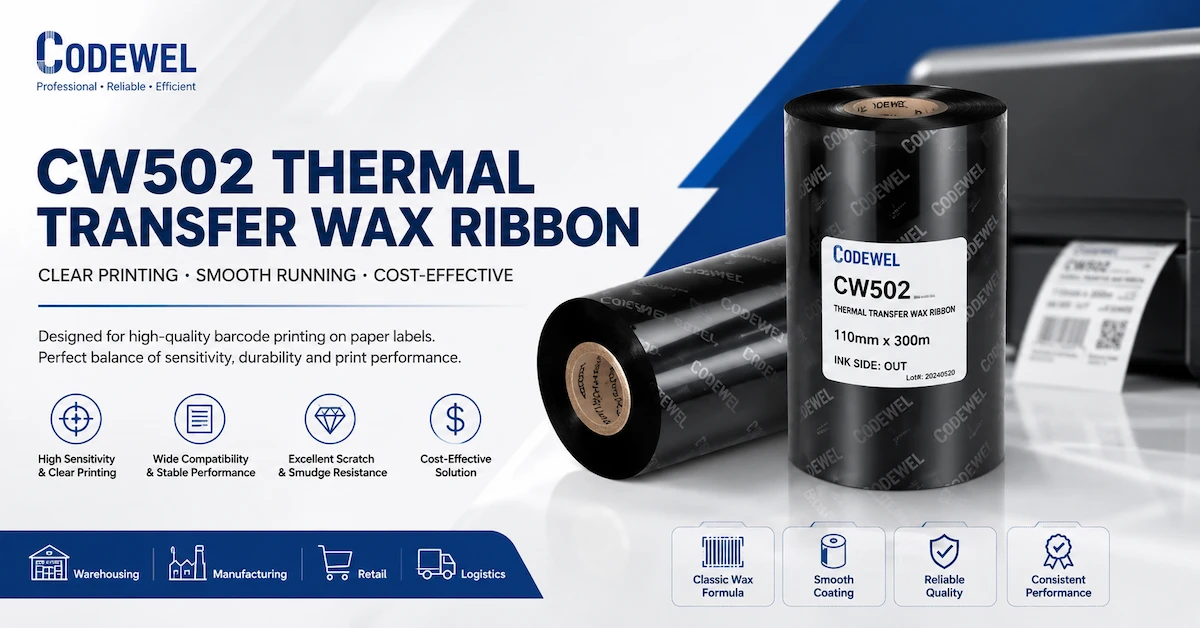
Buyers can review CODEWEL's thermal transfer ribbon range when comparing wax, wax-resin, resin, TTO, and wash-care formulations.
Direct Thermal vs Thermal Transfer: Which One Fits Your Application?
The right technology depends more on label life and operating conditions than on which printer appears cheaper initially.
| Selection Factor | Direct Thermal | Thermal Transfer |
|---|---|---|
| Ribbon Required | No | Yes |
| Typical Label Life | Short to medium | Medium to long |
| Media | Heat-sensitive media | Paper and many synthetic substrates |
| Heat/Light Sensitivity | Higher | Depends on ribbon/media combination |
| Abrasion Resistance | Generally lower | Can be much higher |
| Consumable Management | Simpler | Ribbon + label required |
| Typical Uses | Shipping, receipts, tickets | Manufacturing, asset, industrial labels |
| Best Buyer Priority | Simplicity | Durability and media flexibility |
Choose Direct Thermal When
Direct thermal can be a good fit when:
- Labels are used for a limited period
- The environment is relatively controlled
- Ribbon management is undesirable
- Shipping or receipt printing is the main task
- Long-term chemical or abrasion resistance is unnecessary
Choose Thermal Transfer When
Thermal transfer is usually more appropriate when:
- Labels need extended readability
- Synthetic materials are required
- Products face repeated handling
- Barcode durability matters
- Labels may encounter moisture, chemicals, heat, or abrasion
- Industrial traceability is important
The important point for procurement teams is that neither method is universally “better.” The correct choice is application-specific.
Which Type of Thermal Printer Should You Choose?
Thermal printers are commonly grouped into mobile, desktop, industrial, and automated print-engine categories.
A thermal printing solution provider should determine the category according to actual workflow rather than simply recommending the largest machine available.
Desktop Thermal Printers
Desktop printers are compact and typically suited to low or moderate label volumes.
They are commonly used in:
- Small warehouses
- E-commerce fulfillment
- Retail
- Offices
- Healthcare stations
- Light manufacturing
Their main advantages are:
- Compact footprint
- Straightforward operation
- Lower initial investment
- Convenient label loading
The trade-off is that desktop printers are generally not designed for the same sustained workload as industrial equipment.
For smaller label-printing environments, CODEWEL's DT thermal printer represents the type of compact solution buyers can evaluate for barcode, QR-code, address-label, logistics, retail, and office requirements.
Industrial Thermal Printers
Industrial printers are intended for more demanding workloads and environments.
Typical applications include:
- Production plants
- Distribution centers
- Large warehouses
- Automotive supply chains
- Electronics manufacturing
- High-volume shipping operations
Buyers should look beyond the term “industrial” and check:
- Daily label volume
- Duty cycle
- Media capacity
- Print width
- Print speed
- Resolution
- Construction
- Connectivity
- Replacement component availability
A machine that works well for 500 labels per day may not be the right choice for a production line printing continuously across multiple shifts.
Mobile Thermal Printers
Mobile printers are useful when labels or receipts need to be generated close to the point of work rather than at a fixed workstation.
Common applications include:
- Warehouse picking
- Receiving
- Inventory movement
- Proof of delivery
- Retail floor operations
- Transportation
Wireless connectivity, battery life, drop resistance, print width, and ease of carrying become important selection factors.
Print Engines and Automated Printing Systems
High-throughput packaging and manufacturing lines may use print engines integrated into automated print-and-apply equipment.
These systems are relevant when labels must be:
- Generated automatically
- Applied directly to products or cartons
- Connected to production databases
- Updated with variable data in real time
The buying process for these systems requires much deeper integration planning than purchasing a standalone desktop printer.
The Printer Is Only One Part of the Thermal Printing System
Many recurring printing problems come from treating the printer as an isolated device.
A complete solution needs compatible components.
Thermal Printhead
The thermal printhead determines how heat is applied to create the image.
Important considerations include:
- Printer model
- DPI
- Print width
- Print speed
- Ribbon/media compatibility
- Replacement availability
CODEWEL supplies printheads across multiple printer families, which can be reviewed through its printhead product category.
Poor print quality is not automatically evidence of a defective printer. A worn printhead, contaminated surface, inappropriate heat setting, incompatible media, or unsuitable ribbon can all produce similar symptoms.
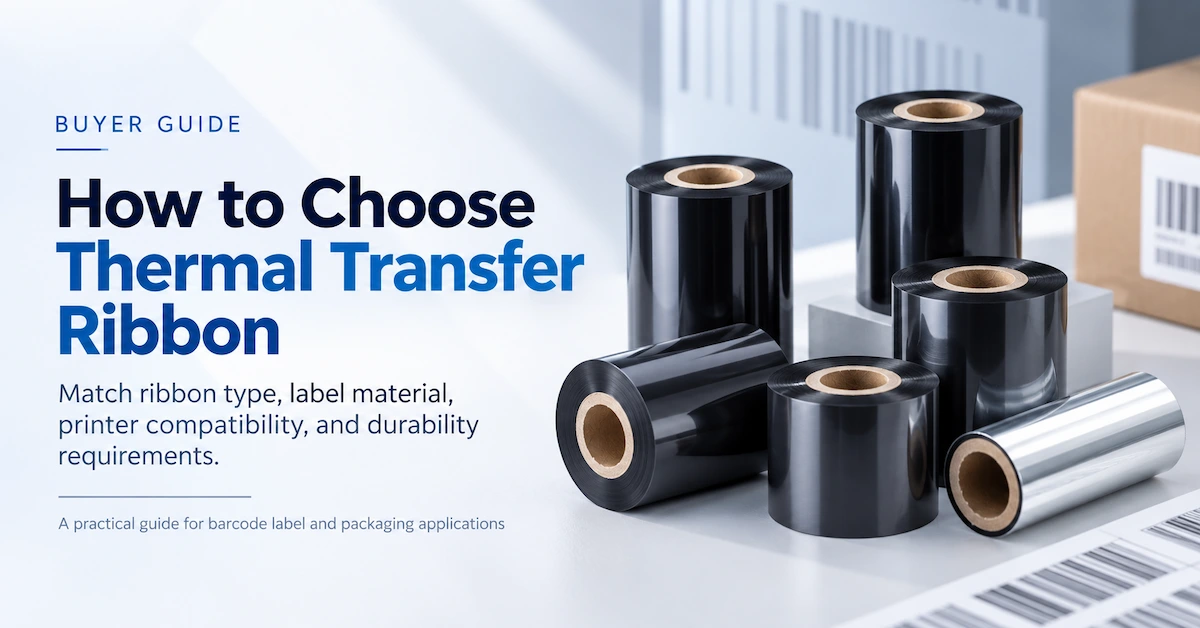
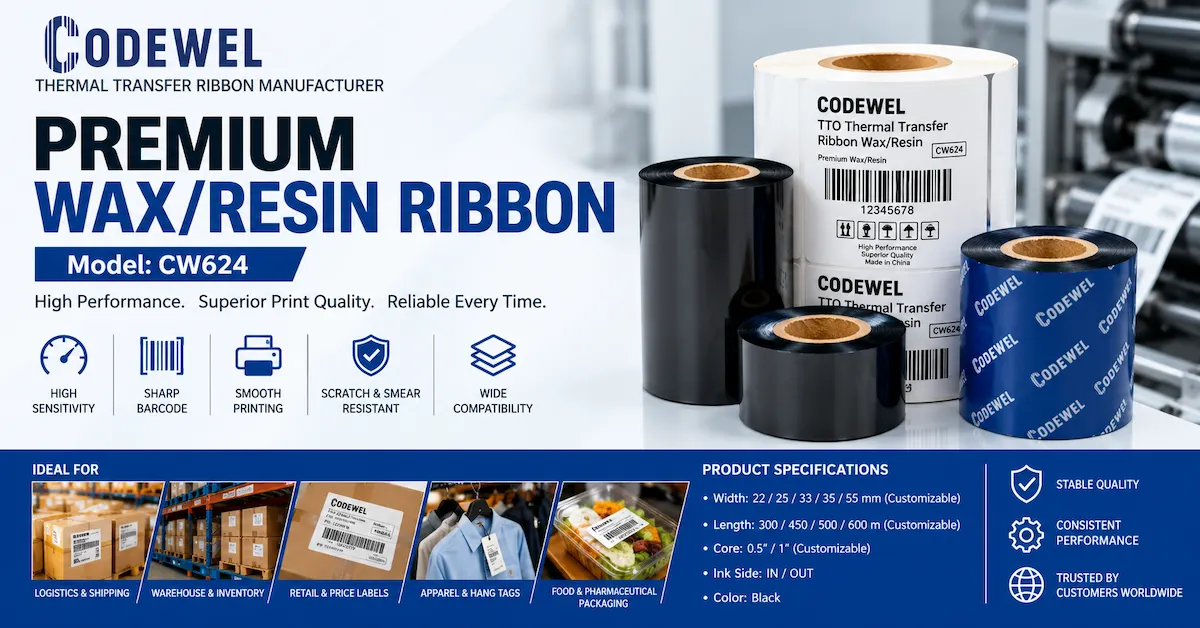
Thermal Transfer Ribbon
For thermal transfer printing, ribbon selection is critical.
The three major formulation families are:
| Ribbon Type | Typical Priority | Common Applications |
| Wax | Economy and speed | Shipping, warehouse, retail |
| Wax Resin | Cost/durability balance | Product and manufacturing labels |
| Resin | Maximum resistance | Automotive, electronics, chemical labeling |
A higher-performance ribbon is not automatically the best choice.
Using resin for a basic indoor paper shipping label may add unnecessary cost. Using standard wax for a chemically exposed PET identification label may create premature print failure.
Label Material
The substrate must also match the ribbon and application.
Typical materials include:
- Uncoated paper
- Coated paper
- PET
- PP
- PE
- PVC
- Textile materials
- Specialty films
For thermal transfer systems, the combination of printer + ribbon + substrate should be tested together.
Barcode Scanner and Verification
The purpose of barcode printing is not simply to make a label look visually acceptable.
It must remain machine-readable.
Barcode scanners and data-capture devices help close the identification loop from:
Print → Apply → Scan → Record → Track
CODEWEL's broader product range includes both 1D and 2D barcode scanning categories alongside its printing products.
What Specifications Matter Most When Selecting a Thermal Printer?
A useful RFQ should contain more information than “I need a barcode printer.”
Print Resolution
Common resolutions include:
- 203 DPI
- 300 DPI
- 600 DPI on some specialist equipment
203 DPI is widely suitable for common shipping and warehouse labels.
300 DPI may be preferred when:
- Text is smaller
- Labels contain more information
- Barcode dimensions are reduced
- Graphic detail is more important
Higher resolution should be selected because the application needs it, not simply because the specification appears better.
Print Speed
Faster printing can improve throughput, but only if barcode quality remains acceptable.
Buyers should evaluate:
- Labels per hour
- Number of operating shifts
- Label complexity
- Ribbon/media compatibility
- Actual production speed rather than maximum specification alone
Print Width
Print width must fit the intended label.
An oversized machine may add cost without benefit, while an undersized printer can make the required layout impossible.
Connectivity
Depending on the workflow, requirements may include:
- USB
- Ethernet
- Serial
- Wi-Fi
- Bluetooth
A warehouse with centralized printer management has different connectivity requirements from a single desktop workstation.
Media Handling
Check:
- Label roll diameter
- Core size
- Ribbon length
- Cutter options
- Peeler/dispenser options
- External media support
Operating Environment
The installation environment can influence the correct equipment level.
Consider:
- Dust
- Temperature
- Humidity
- Vibration
- Cleaning chemicals
- Continuous operating hours
Where Are Thermal Printing Solutions Commonly Used?
The competitor-style “industry use case” structure is useful, but B2B buyers benefit more when each application is connected to a specific printing requirement.
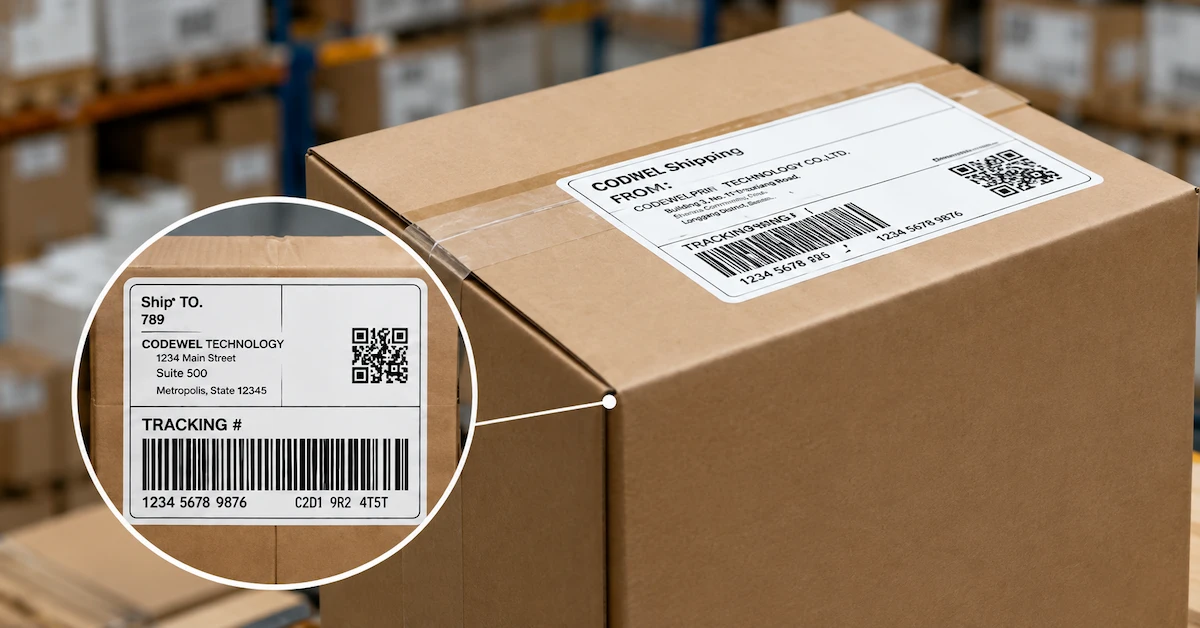
Logistics and Warehousing
Typical tasks include:
- Receiving labels
- Picking labels
- Shipping labels
- Carton identification
- Location labels
- Returns
Key priorities are:
- Fast barcode generation
- Reliable scanning
- Simple media replacement
- Low cost per usable label
Direct thermal may suit short-life shipping labels, while thermal transfer can be selected when warehouse or asset labels require greater durability.
Manufacturing
Manufacturing environments use thermal printing for:
- Work-in-process tracking
- Component identification
- Serial numbers
- Quality-control labels
- Equipment labels
- Finished-product identification
Thermal transfer is especially useful where labels must survive handling or remain attached for an extended period.
Electronics
Electronics manufacturers may require:
- Small labels
- High-resolution barcodes
- Serial-number tracking
- Synthetic substrates
- Heat or abrasion resistance
This often places greater importance on DPI, resin-based ribbon, printhead condition, and substrate compatibility.
Automotive
Automotive supply chains may require labels to survive:
- Friction
- Oils
- Heat
- Long storage periods
Durable thermal transfer systems are usually more relevant than short-life direct thermal printing for these applications.
Healthcare and Laboratory Use
Applications may include:
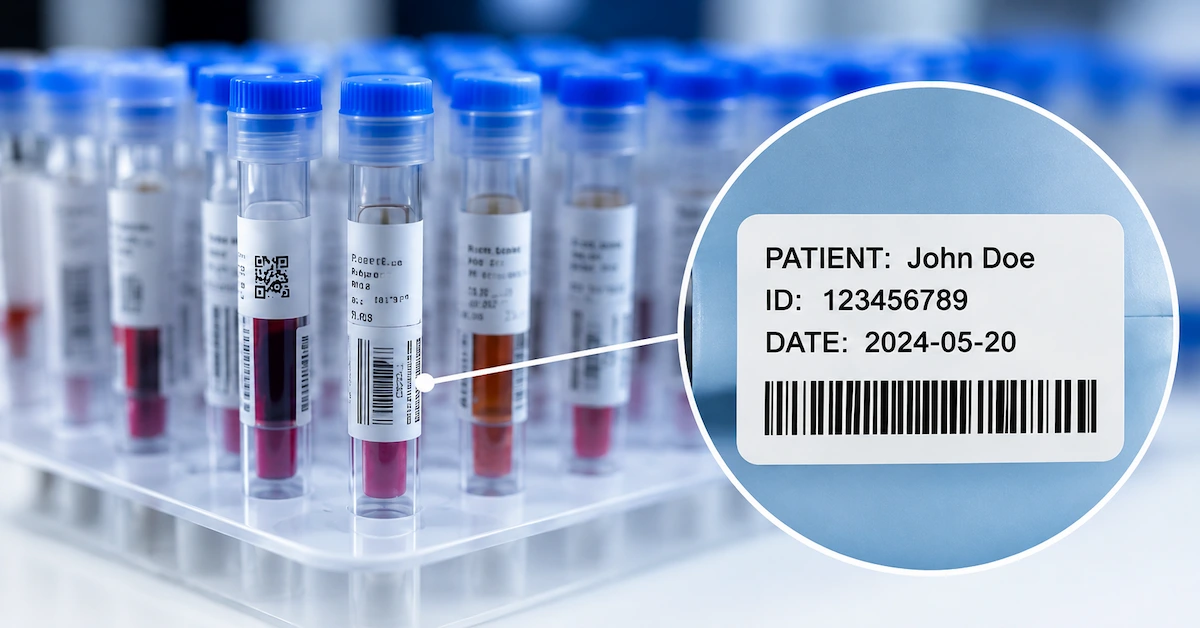
- Specimen identification
- Laboratory labels
- Asset tracking
- Pharmacy labeling
- Patient identification
The correct system depends on expected label life and exposure conditions.
Retail
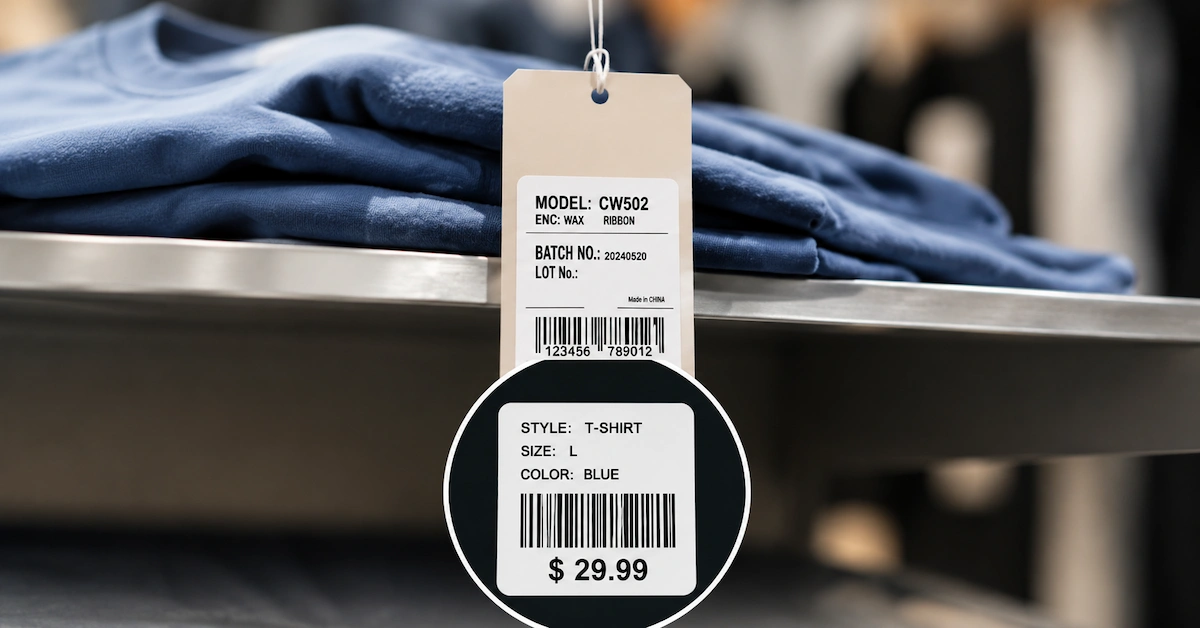
Thermal printers support:
- Price labels
- Product labels
- Receipts
- Inventory control
- Shelf identification
Compact desktop systems and direct thermal technology are often practical where long-term durability is not necessary.
What Are the Main Advantages and Limitations of Thermal Printing?
A good thermal printing solution provider should explain limitations as clearly as benefits.
Advantages
Thermal printing can provide:
- Sharp barcode output
- Fast on-demand printing
- Compact equipment
- Reliable industrial operation
- Low routine mechanical complexity
- Multiple label formats
- Flexible automation
- Strong durability with thermal transfer systems
Limitations
Potential limitations include:
- Direct thermal media sensitivity to heat and light
- Ribbon cost for thermal transfer printing
- Mostly monochrome industrial applications
- Need to correctly match ribbon and media
- Printhead wear over time
- Higher initial cost for industrial equipment
A realistic supplier should not describe one thermal technology as suitable for every application.
How Should B2B Buyers Compare Total Printing Cost?
Printer price is only one part of the investment.
A better purchasing model considers:
Total Printing Cost = Equipment + Media + Ribbon + Printheads + Spare Parts + Label Waste + Downtime + Labor
Initial Equipment Cost
Desktop printers generally require less initial investment than industrial systems.
However, buying an underspecified desktop printer for continuous manufacturing may increase downtime and replacement frequency.
Consumable Cost
Direct thermal requires specialized heat-sensitive media.
Thermal transfer requires both label material and ribbon.
The lower-cost option therefore depends on:
- Label life
- Application
- Volume
- Durability
- Waste rate
Downtime
A printer that stops a packing line creates costs far beyond the repair bill.
For high-volume users, evaluate:
- Spare part availability
- Printhead availability
- Technical support
- Maintenance complexity
Rejected Labels
Poor ribbon/media matching can increase:
- Smudged labels
- Unreadable barcodes
- Reprints
- Production waste
The lowest consumable price is not necessarily the lowest cost per usable label.
How to Evaluate a Thermal Printing Solution Provider
A buyer should evaluate the supplier's ability to solve the entire application.
1. Product Coverage
Can the supplier support:
- Printers
- Ribbons
- Printheads
- Labels
- Scanners
- Spare parts
CODEWEL currently presents these categories within its complete printing product range.
2. Application Knowledge
The supplier should ask about:
- Printer model
- Label material
- Print volume
- Required lifetime
- Working environment
- Barcode dimensions
- Connectivity
3. Compatibility Support
A solution provider should be able to diagnose whether a printing issue comes from:
- Printer settings
- Ribbon
- Media
- Printhead
- Mechanical components
4. OEM and Customization
Distributors and private-label buyers may also require:
- Customized ribbon sizes
- Private labels
- Packaging
- Printer OEM cooperation
- Market-specific configurations
CODEWEL states that it has experience in barcode printer OEM production and operates thermal-transfer-ribbon coating and slitting production capacity.
5. Long-Term Supply
B2B buyers should consider whether the provider can support both the initial installation and future consumable or spare-part requirements.
A Practical Thermal Printing Selection Checklist
Before requesting a quotation, prepare the following information:
| Question | What to Confirm |
| What will be printed? | Barcode, QR code, text, graphic |
| Label lifespan? | Days, months, years |
| Label material? | Paper, PET, PP, textile, other |
| Print volume? | Labels per day or shift |
| Environment? | Indoor, outdoor, heat, moisture, chemicals |
| Printer type? | Desktop, industrial, mobile, automated |
| Resolution? | 203, 300, or application-specific DPI |
| Print width? | Maximum label width |
| Technology? | Direct thermal or thermal transfer |
| Ribbon? | Wax, wax-resin, resin, specialized |
| Connectivity? | USB, Ethernet, Wi-Fi, Bluetooth |
| Service needs? | Printhead, spare parts, technical support |
| OEM needs? | Branding, configuration, packaging |
Providing this information allows a thermal printing solution provider to recommend a system based on operating requirements instead of guessing from a product name.
Why Work With CODEWEL for Thermal Printing Solutions?
CODEWEL focuses on barcode and thermal printing products, with a portfolio covering printers, thermal transfer ribbons, printheads, labels and consumables, scanners, spare parts, and related equipment.
For B2B buyers, this allows the purchasing process to begin with the application:
- What printer is being used?
- What needs to be printed?
- What media is involved?
- How durable must the image be?
- What production volume is expected?
rather than choosing equipment or consumables independently.
Buyers comparing printers can review CODEWEL's printer category, while applications using thermal transfer technology can compare the barcode ribbon range.
For a new project, provide your label size, media, printer requirements, daily print volume, working environment, and required durability through the CODEWEL contact page before final product selection.
Frequently Asked Questions About Thermal Printing Solutions
1. What is a thermal printing solution provider?
A thermal printing solution provider helps customers select and integrate printers, printheads, ribbons or direct-thermal media, labels, scanners, and related equipment according to the actual printing application.
2. What is the main difference between direct thermal and thermal transfer printing?
Direct thermal uses heat-sensitive media and does not require a ribbon. Thermal transfer uses a heated ribbon to transfer the printed image onto the label. Thermal transfer is generally selected when greater durability or broader substrate compatibility is required.
3. Which technology is better for shipping labels?
For short-life shipping labels in controlled conditions, direct thermal can be a practical option. Thermal transfer may be preferable when labels need greater resistance to handling, moisture, heat, or long-term storage.
4. When should I choose an industrial thermal printer?
Consider an industrial printer when daily print volume is high, operation is continuous, media rolls are larger, or the working environment is more demanding than a typical office or desktop application.
5. Is 300 DPI always better than 203 DPI?
No. 203 DPI is sufficient for many common barcode and shipping applications. 300 DPI becomes more useful for smaller text, compact barcodes, dense information, or applications requiring finer detail.
6. Which ribbon should I use for thermal transfer printing?
Wax is generally used for economical paper labels, wax-resin for applications requiring more durability, and resin for demanding synthetic labels exposed to abrasion, chemicals, or heat. Actual selection should be verified on the intended substrate.
7. Can one ribbon work with every thermal printer?
No. Ribbon dimensions, ink side, printhead technology, printer model, speed, and label material should be checked before purchasing.
8. What causes poor thermal print quality?
Possible causes include an unsuitable ribbon/media combination, dirty or worn printhead, incorrect heat setting, excessive speed, poor label material, mechanical pressure issues, or incorrect printer calibration.
9. What information should I send when requesting a thermal printing quotation?
Send the required label size, print volume, label material, application environment, desired durability, barcode type, connectivity needs, printer preference, and any OEM requirements.
10. Can CODEWEL support customized thermal printing projects?
CODEWEL's product portfolio and company information indicate support for barcode printer OEM experience and customized thermal transfer ribbon production. Project-specific requirements should be confirmed directly before finalizing specifications or purchasing terms.
Conclusion
Choosing a thermal printing solution provider should begin with the application, not the printer catalog.
Direct thermal printing is well suited to many short-life labels and receipts, while thermal transfer printing is generally the stronger choice when durability, substrate flexibility, or long-term identification matters.
The right equipment category then depends on print volume, label size, resolution, environment, connectivity, and workflow. Just as importantly, the printer must be matched with the correct printhead, ribbon, label substrate, and data-capture process.
For B2B buyers, the strongest supplier is therefore one that can evaluate the entire printing system, explain trade-offs, support compatible consumables and spare parts, and reduce long-term operational risk.
Explore CODEWEL's thermal printing products, or contact CODEWEL with your label material, size, daily print volume, operating environment, and durability requirements to evaluate an appropriate thermal printing solution.